Craniometry: Measuring Character Through Skull Shape
Scientifically Reviewed · Dr. Marwa Abd-Alazim · September 10, 2026
Review Criteria & Clinical Standards
This content undergoes rigorous scientific peer-review and medical editorial standards at Arab Psychology Network to ensure clinical accuracy, validity, and compliance with evidence-based guidelines from leading psychological and healthcare authorities (APA / WHO).
Introduction and Definition of Craniometry
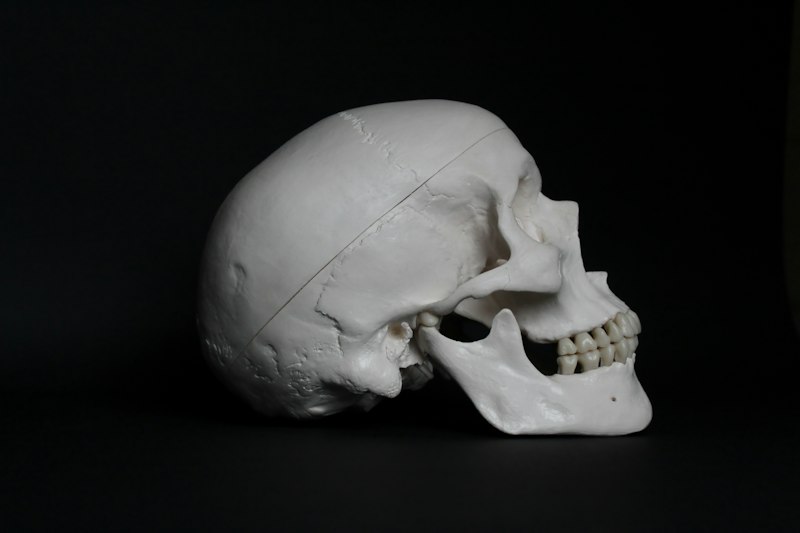
Craniometry is formally defined as the empirical measurement of the cranium, focusing specifically on the quantitative analysis of skeletal features of the head. This highly specialized branch of anthropometry utilizes precise techniques and standardized instruments to quantify the dimensions, volume, and geometric shape of the human skull. Historically, craniometry emerged during the Enlightenment and flourished intensely throughout the 19th century, driven by the desire to systematize human biological variation and understand evolutionary relationships. Unlike general anatomical study, craniometry requires the identification of specific, standardized landmarks—points of reference on the skull—from which all subsequent measurements are taken, ensuring consistency across different researchers and collections. The detailed data gathered through this process, including measurements of maximum length, breadth, and height, were compiled into vast databases intended to classify human populations and, problematically, create hierarchical rankings based on perceived intellectual or behavioral traits. The foundational assertion underlying this practice was that variations in cranial morphology were directly correlated with differences in intelligence, behavior, or racial origin, an assertion that later became the subject of intense scientific scrutiny and condemnation.
The core practice of craniometry involves more than just simple linear measurements; it encompasses the calculation of various indices and angles, which are ratios derived from these primary dimensions. These derived values were considered more significant than the raw measurements alone, as they supposedly normalized the data for overall skull size, allowing for comparisons across individuals of different stature or body mass. Key measurements often include the length from the glabella (the smooth prominence above the nose) to the opisthocranion (the most posterior point of the skull) and the maximum biparietal width. The resulting data set, once compiled, formed the basis for classifying skulls into distinct morphological groups, a process instrumental in the development of early physical anthropology. However, it is crucial to recognize that the term craniometry, while technically referring only to measurement, carries significant historical baggage related to its application in pseudoscientific contexts, particularly those involving racial determinism and biological essentialism, which casts a long shadow over its history.
To accurately perform craniometry, researchers must undergo rigorous training, emphasizing that measuring the skull is a precise task requiring substantial practice and dedication. The slightest error in locating a landmark or applying the measuring instrument can significantly skew the final data, thus compromising the integrity of the entire study. Instruments such as specialized spreading and sliding calipers, craniophores, and specialized tapes are necessary to achieve the requisite levels of precision, often calibrated to millimeters or even fractions thereof. The empirical nature of the study demands that all procedures are repeatable and that the defined landmarks—such as the nasion, bregma, and asterion—are consistently identified across various specimens. This demanding requirement for precision highlights the technical skill involved in the measurement process itself, separate from the often flawed theoretical frameworks that utilized the resulting data.
Historical Origins and Context
The roots of craniometry can be traced back to the burgeoning scientific curiosity of the 18th century, particularly within the field of natural history, where scholars sought systematic methods to classify all living organisms, including humans. Early proponents, such as the Dutch anatomist Petrus Camper (1722–1789), developed concepts like the “facial angle,” which attempted to quantify the degree of prognathism (forward projection of the jaws) as a means of ranking human groups and even comparing humans to apes. Camper’s work, while rudimentary by later standards, established the precedent that quantifiable cranial dimensions could be used as markers of difference. However, the true explosion of craniometric research occurred in the 19th century, driven by evolutionary theories, the rise of formalized anthropology, and, critically, the political and social agendas of colonial powers seeking scientific justification for their dominance.
During this pivotal era, prominent figures like Samuel George Morton (1799–1851), often considered the father of American physical anthropology, amassed enormous collections of human skulls. Morton’s landmark work, notably Crania Americana (1839), meticulously documented and measured hundreds of skulls from various alleged races, attempting to determine cranial capacity (internal volume) by filling the skulls with materials like mustard seed or lead shot. His work, although later proven to contain significant biases and errors in measurement interpretation, provided the empirical backbone for the prevailing theories of polygenism—the idea that different races had separate origins—which directly contradicted monogenism and provided ideological support for slavery and racial hierarchy in the United States. The perceived objectivity of his numerical data lent an air of scientific respectability to deeply prejudiced conclusions, demonstrating how quantification could be deployed to reinforce existing social structures.
The formalization of craniometry was further solidified by European scholars, particularly Paul Broca (1824–1880) in France, who established the Société d’Anthropologie de Paris and standardized many of the instruments and measurement techniques still recognizable today. Broca, along with his contemporaries, sought to create a comprehensive system of anthropometric measurement, viewing the skull as the most reliable indicator of biological type. The relentless pursuit of statistical averages and standard deviations across massive population samples characterized this period. This drive towards comprehensive data collection established craniometry as a central pillar of physical anthropology for nearly a century, despite the mounting evidence that the interpretations drawn from these measurements were often circular, biased, and failed to account for the enormous variation found within any single human population group.
Methodology and Key Instruments
The methodological rigor of craniometry relies heavily on the use of specialized instruments designed to minimize parallax error and maximize precision. The primary tools are the spreading caliper and the sliding caliper. The spreading caliper, resembling a large compass with blunt ends, is essential for measuring the overall dimensions of the skull, such as the maximum cranial length and breadth, especially useful when measuring curves or distances between points not lying on the same plane. The sliding caliper, conversely, is used for smaller, localized measurements, particularly facial dimensions or the distances between points on flat surfaces, offering greater stability and ease of reading for smaller spans. Both instruments must be handled with extreme care to avoid damaging the delicate skeletal material and to ensure that the pressure applied is consistent across all measurements.
Beyond the basic calipers, craniometry employs specialized apparatus for determining volume and angles. The craniophore is a device used to orient the skull in a fixed, reproducible position, often relative to the Frankfort Horizontal Plane—an imaginary plane passing through the lowest point of the margin of the orbit (eye socket) and the highest point of the external auditory meatus (ear canal). This standardization is absolutely crucial, as measurements taken from a skull oriented differently cannot be accurately compared. Furthermore, determining cranial capacity, the internal volume of the braincase, historically involved methods like filling the cavity with shot, seeds, or water, though modern techniques often rely on three-dimensional scanning and digital reconstruction for non-invasive and more accurate volumetric analysis. The shift from physical materials to digital imaging represents a major technological advancement, maintaining the empirical goal while mitigating the risks associated with handling fragile specimens.
The reliability of craniometric data hinges entirely on the accurate identification of cranial landmarks. These landmarks are specific, anatomically defined points that serve as the origin and terminus for all measurements. They are classified into midline points (unpaired, lying on the sagittal suture, such as the nasion and bregma) and bilateral points (paired, such as the zygion or mastoid process). A failure to consistently locate these points, which often requires tactile skill and extensive anatomical knowledge, introduces observer error, a critical flaw that plagued many early craniometric studies. Therefore, successful craniometry isn’t learned overnight; it demands meticulous attention to detail and a commitment to adhering to internationally accepted protocols, ensuring that the resulting numerical data reflects genuine anatomical variation rather than methodological inconsistency.
The Significance of the Cephalic Index
Perhaps the most famous and widely utilized derived measurement in craniometry is the cephalic index (or cranial index). Developed by Swedish anatomist Anders Retzius in the mid-19th century, this index is calculated as the ratio of the maximum breadth of the skull multiplied by 100, divided by the maximum length of the skull (Breadth / Length × 100). The resulting value allows for the classification of human heads (and skulls) into three primary morphological categories, which were once considered definitive markers of human racial groups, although this interpretation is now thoroughly debunked in modern biological science.
The three classical categories defined by the cephalic index are: dolichocephalic (long-headed), characterized by indices typically below 75, suggesting a skull that is long relative to its width; brachycephalic (broad-headed), with indices typically above 80, indicating a skull that is wide relative to its length; and mesocephalic (medium-headed), falling between these two extremes. Retzius and his followers believed that these indices were fixed, immutable characteristics that defined distinct human types and could be used to trace ancestral lines and migratory patterns. The simplicity and apparent mathematical objectivity of the index made it incredibly popular, becoming a cornerstone measurement in anthropological and ethnographic studies globally throughout the late 19th and early 20th centuries, influencing theories about the origins and purity of various European and non-European populations.
However, the scientific validity of using the cephalic index as a marker of fixed racial identity was fundamentally challenged by subsequent research. Notably, studies conducted by Franz Boas in the early 20th century demonstrated that the cephalic index was not a stable, genetically determined trait but was, in fact, highly susceptible to environmental factors, migration, and generational changes. Boas’s research on immigrants and their American-born children showed significant shifts in the index within a single generation, indicating cranial plasticity. This finding was revolutionary, as it directly undermined the central premise of much of 19th-century craniometry—that cranial shape was a permanent biological marker of race. Consequently, while the cephalic index remains a useful descriptive tool in forensic and biological anthropology for describing skull shape, its use as a determinant of racial or ethnic origin has been entirely abandoned due to its lack of scientific foundation and its historical association with discriminatory practices.
Craniometry and Scientific Racism
The history of craniometry is inextricably linked to the history of scientific racism. From its inception, the field was often driven by a pre-existing ideological commitment to establishing a hierarchy of human populations, typically placing European groups at the apex and marginalizing non-European groups. Researchers often sought out measurements and indices that would confirm these preconceived notions, leading to significant biases in data collection, measurement interpretation, and statistical analysis. The goal was not merely to measure difference, but to quantify inferiority, utilizing the perceived neutrality of numbers to legitimize social and political discrimination. This misuse of empirical data represents one of the most ethically troubling chapters in the history of science.
A critical example of this bias involves the interpretation of cranial capacity. Researchers frequently posited that larger cranial volumes equated directly to higher intelligence, and they invariably found that the average cranial capacity of European groups exceeded that of African or Indigenous American populations. However, subsequent re-examinations of the original data, such as Stephen Jay Gould’s detailed analysis of Samuel Morton’s skull collection, revealed systematic, albeit perhaps unconscious, manipulation of the measurements. Gould demonstrated that Morton consistently overestimated the volumes of Caucasian skulls and underestimated the volumes of other groups, often through subtle variations in packing technique or selective inclusion of specimens. This exposure revealed that the supposed objective findings were artifacts of researcher bias, illustrating how ideological frameworks could distort the practice of ostensibly objective scientific measurement.
The legacy of scientific racism embedded within craniometry necessitated a fundamental ethical reckoning within anthropology. The data generated through these biased studies was used to justify policies ranging from discriminatory immigration quotas and eugenics programs to the denial of basic human rights. Modern biological anthropology has therefore shifted dramatically away from using cranial measurements to define race, recognizing race as a primarily social and cultural construct rather than a biological reality demonstrable through metric analysis. While techniques derived from craniometry are still employed, their application is strictly limited to non-racial contexts, such as forensic identification or the study of population history without hierarchical intent, ensuring that the empirical measurement is divorced from its historically toxic interpretations.
Relationship to Phrenology and Anthropometry
Craniometry exists within the broader discipline of anthropometry, which is the systemic measurement of the human body, but it also shares a complicated historical relationship with the discredited pseudoscience of phrenology. Anthropometry encompasses all body measurements—stature, limb length, weight, and proportion—and is a legitimate field used today in ergonomics, biomechanics, and human growth studies. Craniometry is simply the sub-branch focused exclusively on the skull. Both disciplines rely on the core principles of standardization, precision measurement, and statistical comparison across populations, providing a quantitative framework for studying physical variation.
In contrast, phrenology, popular concurrently with early craniometry, was based on the premise that specific mental faculties and character traits were localized in distinct regions of the brain, and that the size of these regions was reflected in the external contours and bumps of the skull. Phrenologists would manually “read” the skull, interpreting these external features as indicators of personality, criminality, or genius. While craniometry focused on internal volume and standardized distances, phrenology focused on external morphology and subjective interpretation. However, the two fields often intersected because both sought to correlate cranial characteristics with intelligence and behavior, sharing a common methodological assumption that the skull served as a reliable map to internal human qualities.
The critical distinction is that craniometry, despite its flawed applications, maintained an empirical basis rooted in measurable, verifiable dimensions, whereas phrenology lacked any scientific validation for its correlations between bumps and personality traits. The decline of phrenology was swift once neurological science advanced, but craniometry persisted because the measurements themselves were accurate, even if their interpretations were skewed by bias. Therefore, while modern science rejects the deterministic conclusions drawn by both 19th-century craniometrists and phrenologists, craniometry contributed the foundational techniques—standardized landmarks, precise calipers, and statistical methods—that were later refined and ethically applied in biological anthropology and forensic science, purging the practice of its pseudoscientific associations.
Modern Applications in Biological Anthropology
Despite its problematic history, the technical methodology of craniometry remains a powerful tool when applied within modern, ethical frameworks. In contemporary biological anthropology, craniometric data is primarily utilized for two key purposes: analyzing patterns of human microevolution and assessing biological affinity between ancient and modern populations. By utilizing advanced statistical techniques, such as multivariate analysis, researchers can study subtle variations in cranial morphology to reconstruct population histories, understand migration routes, and track genetic drift over millennia, moving entirely away from the concept of fixed, discrete racial types.
One crucial modern application is in forensic anthropology. Craniometric measurements, combined with non-metric (epigenetic) traits, are invaluable for establishing the biological profile of unknown skeletal remains. Measurements of the facial skeleton, nasal aperture, and overall cranial shape provide crucial data points that help forensic scientists estimate characteristics such as biological sex and ancestry—though the term “ancestry” is preferred over “race” to reflect the complex, non-discrete nature of human geographical variation. Furthermore, precise craniometric data is essential for generating facial reconstructions, where the underlying bone structure must be accurately mapped to predict overlying soft tissue thickness, aiding in the identification process.
Moreover, craniometry is employed in specialized medical fields, such as orthodontics and maxillofacial surgery, where precise measurements of the skull and facial bones are necessary for diagnosis, treatment planning, and monitoring outcomes. The utilization of geometric morphometrics represents the modern evolution of craniometry. This technique moves beyond simple linear measurements and indices by analyzing the coordinates of landmarks in two or three dimensions, allowing researchers to study the overall shape variation of the skull in a highly sophisticated, holistic manner. This digital approach minimizes observer error, facilitates complex statistical comparison, and provides a much richer understanding of morphological variation than was possible with 19th-century methods.
Ethical and Scientific Critique of Craniometry
The most enduring critique of historical craniometry centers on its inherent circular reasoning and deterministic bias. Researchers often began with the assumption of racial hierarchy and then selectively utilized or interpreted the measurements to confirm that hierarchy. The methodology, while superficially objective due to its reliance on numbers, was often contaminated by methodological weaknesses, including small sample sizes, non-standardized measurement techniques, and the failure to account for variables such as nutrition, climate, and non-genetic factors that influence skeletal development. Consequently, the scientific conclusions drawn were not driven by the data but were instead imposed upon it by cultural prejudice.
Modern scientific understanding fundamentally rejects the central tenet of classical craniometry: that cranial measurements can be used to delineate discrete, biologically meaningful races or predict complex behavioral traits like intelligence. Genetic studies have demonstrated that the vast majority of human genetic variation exists within, rather than between, traditionally defined racial groups. Furthermore, the traits measured by craniometrists, such as cranial capacity, show a weak and inconsistent correlation with cognitive ability. The shape of the skull is subject to a multitude of environmental pressures and developmental factors, making it an unreliable proxy for fixed genetic or intellectual differences.
In conclusion, while the techniques of precise cranial measurement remain a valuable empirical tool in specialized fields like forensics and biological anthropology, the historical framework of craniometry serves as a powerful cautionary tale. It demonstrates the profound necessity for ethical rigor and self-correction in scientific practice, emphasizing that quantitative data, however precise, must always be interpreted free from ideological bias. The ongoing scientific critique ensures that current applications of craniometry focus exclusively on understanding non-hierarchical human variation and maintaining the highest standards of objectivity.