Tag: human anatomy


FORAMEN

The human body contains several foramina, which are openings in the skeletal structure. Foramina are important for providing pathways for nerves, blood vessels, and other structures to travel through the body. This article will discuss the anatomy of foramina, their clinical relevance, and the various types of foramina found in the human body. Anatomy of […]

Read More

FALLOPIUS

An Introduction to the Life and Legacy of Girolamo Fallopio The history of medical science is punctuated by the contributions of visionary figures who dared to look beneath the surface of the human form to uncover the mysteries of physiology. Among the most prominent of these figures is Girolamo Fallopio, often Latinized as Fallopius, an […]

Read More

BRACHYMORPH

Introduction and Definitional Framework The term Brachymorph, derived from the Greek roots brachys (meaning short) and morphē (meaning form or shape), denotes a distinct human constitutional type characterized primarily by a physical structure exhibiting abnormally short and broad features. This classification is fundamental within the fields of anthropometry, constitutional psychology, and human biology, serving as […]

Read More

FORAMEN MAGNUM

Introduction and Definition The foramen magnum, Latin for “great hole,” is a critical anatomical aperture located centrally within the base of the skull. This substantial opening serves as the primary gateway connecting the contents of the cranial cavity—specifically the brainstem—with the vertebral canal, which houses the spinal cord. It represents one of the most vital […]

Read More

CRANIOMETRY

Introduction and Definition of Craniometry Craniometry is formally defined as the empirical measurement of the cranium, focusing specifically on the quantitative analysis of skeletal features of the head. This highly specialized branch of anthropometry utilizes precise techniques and standardized instruments to quantify the dimensions, volume, and geometric shape of the human skull. Historically, craniometry emerged […]

Read More

OLFACTORY NERVE

OLFACTORY NERVE: INTRODUCTION AND DEFINITION The olfactory nerve, designated as Cranial Nerve I (CN I), holds the unique distinction of being the first and shortest of the twelve pairs of cranial nerves. This crucial sensory pathway is exclusively responsible for transmitting specialized afferent signals related to the sense of smell, known scientifically as olfaction. Unlike […]

Read More

URINATION

Definition, Terminology, and Physiological Purpose The act of releasing urine from the urinary bladder is formally known as micturition, although the more common term in general usage is urination or voiding. This complex physiological process is fundamental to homeostasis, serving as the primary mechanism for the excretion of metabolic waste products—such as urea and creatinine—and […]

Read More

NASAL CAVITY

Introduction and Definition of the Nasal Cavity The nasal cavity is a critical anatomical structure serving as the initial and primary entry point for the respiratory tract in humans. Functionally defined, it constitutes the voluminous, air-filled space situated posterior to the external nose and superior to the oral cavity, extending back toward the pharynx. This […]

Read More

FASCIA

Defining Fascia and Fascial Tissue Fascia, frequently referred to interchangeably as fascial tissue, represents one of the most pervasive yet historically underestimated elements within the human anatomical structure. Broadly characterized, fascia is a complex, continuous web of fibrous connective tissue that permeates the body, functioning not merely as packing material but as an integrated, dynamic […]

Read More

DORSIFLEXION

Introduction and Core Definition of Dorsiflexion Dorsiflexion is a specific movement within the realm of human kinematics that describes the flexion of a joint where the distal part moves toward the superior or upper surface of the limb. While the term can be applied conceptually to several joints, its primary and most critical anatomical application […]

Read More

ANIMAL MODEL

Introduction and Foundational Definition The concept of the animal model is foundational within biomedical, psychological, and pharmaceutical research, serving as a critical intermediary step in understanding complex biological phenomena before human trials. Fundamentally, an animal model is defined as a non-human species used to study aspects of human biology, disease pathogenesis, therapeutic interventions, or behavioral […]

Read More

BILATERAL SYMMETRY

Introduction and Definition of Bilateral Symmetry Bilateral symmetry, a foundational concept in anatomy, biology, and increasingly relevant to psychology, describes a geometric arrangement where the body or organism can be divided into two halves—typically designated as left and right—that are approximate mirror images of each other along a central, longitudinal axis. This organizational principle is […]

Read More

PHYSIQUE TYPE

The Concept of Physique Type and Constitutional Psychology The term physique type refers fundamentally to the basic physical anatomy, construction, and overall morphological structure of an individual, particularly when assessed within the historical framework of constitutional psychology. This field, prominent in the mid-20th century, sought to establish definitive correlations between inherent physical structure, known as […]

Read More

ANTAGONISTIC MUSCLES

Introduction and Core Definition Antagonistic muscles represent a fundamental organizational principle within the human musculoskeletal system, defined as pairs or groups of muscles that exert forces in diametrically opposed directions across a joint. This crucial arrangement is the biological mechanism that permits dynamic, flexible, and controlled movement. When motion is initiated, the muscle responsible for […]

Read More

PALMAR

Introduction and Definitional Scope of the Palmar Region The term palmar fundamentally serves as an anatomical adjective referring specifically to the palm, which is the corresponding surface of the hand in humans. This designation is crucial in anatomical nomenclature, distinguishing this ventral surface from the dorsal (back) surface of the hand. In human anatomy, the […]

Read More

PENIS

Introduction and Definition The penis is the primary external sexual and excretory organ in human males and other male mammals, serving essential dual functions within the body’s complex systems. Anatomically, it is a cylindrical structure designed for the conveyance of urine from the bladder, a process managed by the urinary tract, and crucially, for the […]

Read More

SKELIC INDEX

Definition and Fundamental Calculation The Skelic Index is a foundational metric within the field of anthropometry, serving as a standardized anatomical ratio designed to quantify the relative proportions of the human torso and lower limbs. Specifically, the index provides a numerical representation of the relationship between the length of the legs and the length of […]

Read More

SKIN-SENSORY SPOT

Introduction to Skin-Sensory Spots The concept of the skin-sensory spot forms a fundamental pillar in the understanding of somatic sensation, differentiating the general perception of touch from the highly localized, punctate nature of specific sensory reception. Far from being a uniform sheet of receptive tissue, the human skin is organized into a mosaic of discrete […]

Read More

BRACHIUM

The Brachium: Anatomical Basis and Behavioral Significance Core Definition and Anatomical Structure The term Brachium, derived from Latin, refers specifically in human anatomy to the upper segment of the arm, extending from the shoulder joint (glenohumeral joint) down to the elbow joint. It is fundamentally defined by the presence of the humerus, the single long […]

Read More

SENSITIVE ONE

Differential Somatic Sensitivity: The Psychology and Physiology of Highly Responsive Sensory Points The Core Definition of Somatic Sensitivity The concept of the “sensitive one,” often referred to in formal psychology and physiology as Differential Somatic Sensitivity or localized high sensory receptivity, describes specific areas on the body surface that exhibit a dramatically heightened responsiveness to […]

Read More

EXECUTIVE ORGAN

Executive Organ in Psychology and Biology The Core Definition and Mechanism The concept of the executive organ refers fundamentally to the biological structure—typically a muscle or a gland—that carries out a command issued by the central Nervous System in response to an internal or external stimulus. In its simplest interpretation, it is the body part […]

Read More

AURICLE

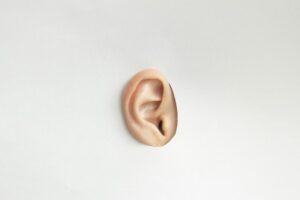
AURICLE The Core Definition of the Auricle and Its Function The auricle, commonly known as the pinna, represents the external, visible component of the ear structure in mammals. While often perceived simply as a fleshy appendage, its form and function are deeply intertwined with the psychological processes of hearing and perception. Fundamentally, the auricle acts […]

Read More

SPINAL COLUMN

Cognitive Dissonance Theory The Core Definition and Mechanism The psychological phenomenon known as Cognitive Dissonance is fundamentally defined as the mental stress or discomfort experienced by an individual who holds two or more contradictory beliefs, ideas, or values, or when they act in a way that is inconsistent with their established attitudes. This discomfort is […]

Read More

MUSCLE FIBER

Muscle fibers are the individual cells that make up the muscle tissue in the human body. They are responsible for the contraction and relaxation of muscle tissue, which is essential for movement and daily functioning. Muscle fibers are composed of several different types of proteins and are classified as either slow-twitch or fast-twitch fibers. Each […]

Read More

TYPE IV CELL

Cognitive Dissonance Theory The field of psychology is fundamentally concerned with understanding how individuals process information and maintain a coherent sense of self within a complex world. A cornerstone concept in this endeavor is Cognitive Dissonance Theory, which provides a powerful explanation for the human tendency toward internal consistency and the often-irrational behaviors we exhibit […]

Read More

MACROSPLANCHNIC TYPE

Macroplanchinic Type: An Anatomical Overview The Core Definition The Macroplanchinic Type refers to a distinct anatomical configuration recently identified in various mammalian species, including humans. Fundamentally, it is characterized by the presence of a substantial, flattened organ or tissue mass that is positioned entirely outside the abdominal cavity, yet maintains a crucial connection to the […]

Read More

CORONAL PLANE

The Coronal Plane: A Fundamental Anatomical Reference Introduction: Defining the Coronal Plane The coronal plane, also extensively known as the frontal plane, represents one of the three fundamental planes employed in the study of human anatomy to precisely describe the orientation, position, and movement of the body and its constituent parts. This crucial conceptual division […]

Read More

PROXIMAL

Proximal The Core Definition: Understanding Psychological Proximity In the expansive field of psychology, the term proximal refers to factors, influences, or events that are immediate, close at hand, or directly interacting with an individual or a phenomenon. Unlike its anatomical counterpart which denotes physical closeness to a central reference point in the body, psychological proximality […]

Read More

DYNAMOGENESIS

Dynamogenesis: The Physiological Basis and Psychological Significance of Muscle Contractions The Core Concept of Dynamogenesis Dynamogenesis, in a physiological context, refers to the fundamental process of muscle contractions that are absolutely essential for a vast array of physiological functions within the human body. This intricate biological mechanism underpins everything from the most subtle movements of […]

Read More