The Cuneus: Decoding Your Visual Reality
Scientifically Reviewed · Dr. Marwa Abd-Alazim · August 22, 2026
Review Criteria & Clinical Standards
This content undergoes rigorous scientific peer-review and medical editorial standards at Arab Psychology Network to ensure clinical accuracy, validity, and compliance with evidence-based guidelines from leading psychological and healthcare authorities (APA / WHO).
Introduction and Definition of the Cuneus
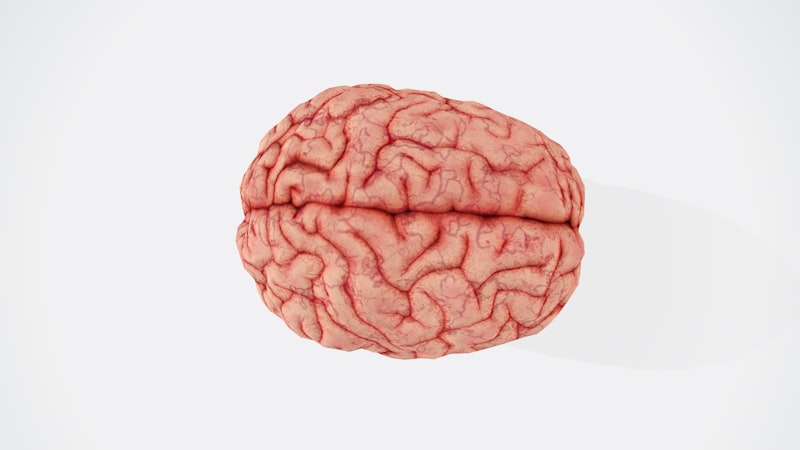
The Cuneus, a Latin term meaning wedge, is a fundamental anatomical structure nestled within the medial aspect of the occipital lobe of the human brain. This region, critically positioned at the posterior pole of the cerebral hemispheres, derives its name from its characteristic triangular or wedge-like shape when viewed in sagittal section. Functionally, the Cuneus is far more than a mere landmark; it constitutes a significant portion of the primary visual cortex (V1, or Brodmann Area 17), rendering it indispensable for the initial processing and interpretation of visual stimuli received from the external environment. Understanding the Cuneus requires appreciating its precise location relative to major fissures and sulci, as these boundaries delineate its functional specialization and clinical significance. Its central role in vision establishes it as a cornerstone of neuroanatomy and visual neuroscience, influencing everything from basic light detection to complex spatial recognition and memory formation associated with visual experience.
From a topographical perspective, the Cuneus is situated superior to the prominent calcarine fissure, which serves as a crucial dividing line across the medial surface of the occipital lobe. This fissure not only separates the Cuneus superiorly from the lingual gyrus inferiorly but also represents the central topographical representation of the horizontal meridian within the visual field. Consequently, the anatomical structure of the Cuneus directly maps onto specific segments of the contralateral visual world. Its position above the calcarine fissure dictates that the Cuneus primarily processes information originating from the inferior quadrants of the visual field, a specialized organizational principle known as retinotopy. The integrity of this region is paramount; documented cases of its congenital absence or severe atrophy, though exceedingly rare, underscore its irreplaceable nature in maintaining comprehensive visual functionality.
The study of the Cuneus extends beyond pure morphology into the realm of complex connectivity, as it is heavily interconnected with various subcortical and cortical areas responsible for advanced visual processing. It receives direct afferent input from the lateral geniculate nucleus (LGN) of the thalamus via the optic radiations, marking the culmination of the visual pathway before conscious perception begins. Furthermore, efferent projections from the Cuneus feed into higher-order visual association areas, including the dorsal stream (the “where” pathway) and the ventral stream (the “what” pathway), facilitating the analysis of motion, spatial relationships, object recognition, and color perception. Therefore, the Cuneus acts as the gateway for raw visual data, transforming electrochemical signals into the foundational components required for constructing a coherent and detailed visual reality.
Anatomical Location and Morphology
The precise borders of the Cuneus are defined by several critical sulci and fissures that segment the occipital lobe. Anteriorly, it is delineated by the parieto-occipital sulcus, a deep fissure that separates the occipital lobe from the parietal lobe. This sulcus provides a clear anatomical boundary, distinguishing the primary visual processing areas from those involved in somatosensory integration and spatial awareness. The posterior boundary of the Cuneus typically terminates near the occipital pole, slightly wrapping around the extreme posterior end of the hemisphere. Medially, the Cuneus forms part of the wall of the longitudinal cerebral fissure, the deep groove that separates the two cerebral hemispheres. This intricate anatomical placement ensures that the Cuneus in each hemisphere processes visual information from the opposite half of the visual field, consistent with the decussation (crossing) of the optic nerve fibers at the optic chiasm.
Morphologically, the wedge shape of the Cuneus is apparent on the medial surface of the cerebrum. This shape is crucial because it houses the highly organized laminar structure of the primary visual cortex. Histologically, the Cuneus is characterized by the presence of the Stria of Gennari, a distinct band of myelinated axons running through the cortical layer IV, which is a hallmark feature of Area 17 (V1). The density and arrangement of neurons within the Cuneus are optimized for rapid, high-resolution initial processing. The cortex here is six-layered, typical of the neocortex, but layer IV is disproportionately thick, reflecting the massive influx of input from the thalamus. This dense input structure allows the Cuneus to perform fundamental operations such as detecting edges, orientations, and spatial frequencies within the visual input before the information is distributed elsewhere for further analysis.
The relationship between the Cuneus and the surrounding gyri is highly integrated. Inferior to the Cuneus lies the lingual gyrus, separated by the aforementioned calcarine fissure. While both structures contribute to V1, they process different parts of the visual field, with the lingual gyrus handling the superior visual field (the lower half of the retina). This topographic division ensures that damage limited to the Cuneus will result in specific, predictable visual field deficits. Furthermore, the posterior portion of the Cuneus often extends into the area known as V2 and V3, secondary visual processing areas that begin to analyze more complex features like shapes and movement. Thus, the Cuneus is not an isolated unit but the nexus point where basic visual data transition into more elaborate perceptual streams.
Neurophysiological Function: Primary Visual Cortex (V1)
The primary neurophysiological function of the Cuneus is its role as the major constituent of the primary visual cortex, or V1. V1 is the first cortical area in the brain to receive direct input from the retina via the LGN, making it the essential starting point for conscious visual experience. The Cuneus is responsible for the preliminary analysis of all incoming visual data, including fundamental properties such as light intensity, color, and orientation of lines and edges. The organizational principle within V1 is highly specialized, consisting of functional units called cortical columns. These columns are organized into hypercolumns, which efficiently process every aspect of a small region of the visual field, including ocular dominance (input from one eye or the other) and orientation selectivity. This intricate columnar architecture allows for the precise and segregated analysis of visual features.
The Cuneus operates based on a precise retinotopic map, meaning that adjacent points in the visual field are represented by adjacent neural populations within the Cuneus itself. Specifically, the Cuneus processes information originating from the inferior contralateral visual quadrant. This means that, for example, the right Cuneus processes the lower left quarter of the visual field. This meticulous mapping is inverted and reversed, a phenomenon arising from the geometry of light projection onto the retina and the subsequent crossing of visual pathways. The central visual field, or the foveal representation, is typically allocated a disproportionately large area of the cortex within the most posterior tip of the Cuneus and Lingual Gyrus, a concept known as cortical magnification. This magnification reflects the high acuity needed for central vision tasks, such as reading or detailed object inspection.
Beyond simple input reception, the neurons within the Cuneus exhibit highly selective tuning properties. Simple cells respond optimally to bars or edges of a specific orientation at a specific location, while complex cells respond to movement of these features across a larger receptive field. These specialized responses are the result of hierarchical processing, where inputs from multiple LGN cells converge onto a single V1 cell. This initial feature extraction is crucial because it transforms the raw sensory signal into meaningful components that higher cortical areas can use to construct complex percepts. Disruptions to the Cuneus, even small focal lesions, therefore result in precise losses of specific parts of the visual field, known as scotomas, demonstrating the highly localized nature of its function.
Role in Visual Processing Pathways
While the Cuneus is primarily V1, its superior-posterior location means it is involved in the initial divergence of visual information into the two major processing streams: the dorsal and ventral pathways. The dorsal stream, often referred to as the “where” or “how” pathway, originates largely from the superior parts of V1 (the Cuneus) and projects forward into the parietal lobe. This pathway is concerned with spatial localization, motion detection, and guiding motor actions in response to visual input (visuomotor control). The Cuneus contributes significantly to this stream by providing the foundational spatial and motion data necessary for parietal cortex calculations regarding object location and trajectory.
The ventral stream, or the “what” pathway, involves projections primarily from the inferior parts of V1 (the Lingual Gyrus) and V2/V3, extending forward into the temporal lobe. This pathway is dedicated to object recognition, face processing, color analysis, and linking visual input to memory and emotion. While the Cuneus contributes less directly to the core function of the ventral stream compared to the Lingual Gyrus, its initial processing of color and fine detail is necessary input. Furthermore, the higher-order areas immediately surrounding the Cuneus, specifically V2 and V3, serve as transitional zones, integrating the basic features extracted by V1 and beginning to sort them for the distinct demands of the two pathways.
The efficiency of the visual processing that begins in the Cuneus relies heavily on feedback loops. While the Cuneus receives massive feedforward input from the LGN, it also receives substantial feedback projections from higher cortical areas (V2, V3, and even parietal and frontal regions). These feedback connections are thought to modulate V1 activity based on expectation, attention, and context. For instance, when a person focuses attention on a specific part of the visual field, top-down signals originating from the frontal eye fields can enhance the activity of the corresponding retinotopic area in the Cuneus, effectively sharpening the perceived image and filtering out irrelevant noise. This dynamic interaction highlights that visual processing is not a purely passive, linear process, but rather a complex, active construction heavily influenced by cognitive state.
Vascular Supply and Clinical Relevance
The Cuneus, like much of the medial occipital lobe, is primarily supplied by the terminal branches of the Posterior Cerebral Artery (PCA). This major artery originates from the basilar artery and wraps around the midbrain, supplying the posterior and inferior surfaces of the cerebrum. The visual cortex, particularly the Cuneus and surrounding areas, is highly vulnerable to ischemic events affecting the PCA territory. Due to the PCA’s relatively narrow diameter and its long course, it is a common site for embolic or thrombotic occlusion, leading to strokes that specifically impair visual function while often sparing motor or somatosensory abilities.
The clinical consequence of PCA occlusion involving the Cuneus is typically a specific form of visual field loss. If the PCA is occluded unilaterally, the patient will experience a homonymous hemianopia affecting the contralateral visual field. If the occlusion spares the extreme posterior tip of the occipital lobe—which sometimes receives dual blood supply from the Middle Cerebral Artery (MCA), a phenomenon known as the visual cortex watershed area—a condition known as macular sparing may occur. In macular sparing, central, high-acuity vision remains intact, while the surrounding peripheral visual field is lost. This precise correlation between the vascular territory and the resulting functional deficit makes strokes affecting the Cuneus highly informative regarding the brain’s retinotopic organization.
Furthermore, localized damage to the Cuneus can result in specific scotomas. Because the Cuneus maps the inferior visual quadrants, a lesion limited only to the Cuneus would result in a superior homonymous quadrantanopia—loss of vision in the upper quarter of the contralateral visual field. The predictable nature of these visual deficits is essential for clinical diagnosis, allowing neurologists to pinpoint the exact location of a vascular lesion or tumor based purely on the patient’s subjective report of visual loss. The vulnerability of the Cuneus to vascular insult emphasizes the critical reliance of fundamental visual perception on uninterrupted arterial flow through the PCA.
Associated Disorders and Lesions
Lesions affecting the Cuneus are almost exclusively associated with disorders of vision, ranging from complete blindness in the corresponding visual field to subtle perceptual deficits. The most common and dramatic manifestation is a hemianopia, resulting from large lesions that destroy the entire Cuneus and the underlying optic radiations in one hemisphere. A smaller, highly localized lesion (often resulting from a small lacunar infarct) may produce a dense scotoma, a blind spot within the visual field that is stationary and predictable based on the retinotopic map of the damaged area. These scotomas are often described by patients as a permanent hole or darkening in their vision.
Beyond simple visual field loss, damage to the Cuneus or the immediately adjacent higher visual areas (V2/V3) can contribute to higher-order visual disturbances. While V1 damage typically results in cortical blindness, damage to the surrounding association areas can lead to forms of visual agnosia, where the patient can physically see the object but cannot recognize or name it. For example, damage extending into V4 (often associated with the lingual gyrus but sometimes involving adjacent Cuneus areas) can result in cerebral achromatopsia, a rare condition where the world is perceived in shades of gray despite the eyes and V1 remaining intact. Although V1 itself is primarily responsible for basic feature extraction, its destruction renders all subsequent visual processing impossible for that segment of the visual field.
Another rare but important condition linked to occipital lobe disruption is Anton-Babinski syndrome, though this typically involves more widespread bilateral damage. In this syndrome, the patient is cortically blind (due to bilateral V1 destruction, including both Cunei) but denies or is unaware of their blindness, sometimes confabulating details about what they “see.” This highlights the profound dissociation between visual input and conscious awareness that can occur when the primary cortical receptor site is destroyed. Treatment for lesions affecting the Cuneus is often focused on rehabilitation and adaptation, as the adult primary visual cortex has limited capacity for regeneration, making the initial damage permanent.
Developmental Aspects and Plasticity
The development of the Cuneus is a highly orchestrated process crucial for establishing the foundation of visual perception. The migration of neurons to the occipital pole occurs early in gestation, followed by extensive synaptogenesis and pruning in late gestation and early infancy. The Cuneus is one of the last cortical regions to fully myelinate, a process that continues throughout childhood and adolescence. This protracted myelination period suggests that the functional maturation of visual processing capacity continues well into the first two decades of life, influencing critical periods for visual learning and acuity development. The early years are crucial for establishing appropriate ocular dominance columns and ensuring the precise alignment of the retinotopic map.
The concept of critical periods is highly relevant to the Cuneus. If visual input is severely restricted during early childhood—for example, due to untreated congenital cataracts or strabismus—the corresponding areas in the Cuneus may fail to develop normal functional connectivity or responsiveness, leading to a condition known as amblyopia, or “lazy eye.” Even if the physical obstruction is later removed, the cortical architecture may have permanently adapted to the lack of input, demonstrating the profound dependency of Cuneus development on early visual experience. This developmental plasticity is highest immediately after birth and gradually diminishes, underlining the importance of early intervention for pediatric ophthalmological issues.
In adulthood, the Cuneus exhibits remarkable, though limited, plasticity, particularly following visual impairment. Studies involving individuals who are born blind or become blind early in life show evidence of cross-modal plasticity, where the Cuneus, normally dedicated to sight, can be recruited to process non-visual information, such as auditory localization or somatosensory input (e.g., Braille reading). Functional imaging studies have demonstrated that when congenitally blind individuals read Braille, there is activation in the primary visual cortex, including the Cuneus, suggesting that the cortical space is repurposed for enhanced tactile processing. This functional reorganization illustrates the brain’s adaptive capacity to maximize the utility of available cortical real estate when the primary sensory modality is lost.
Research Methodologies
The Cuneus is a heavily studied region, benefiting from a variety of advanced neuroimaging and neurophysiological techniques. Functional Magnetic Resonance Imaging (fMRI) is the primary tool used to map the retinotopic organization of the Cuneus in living human subjects. By presenting subjects with visual stimuli (e.g., flickering wedges or expanding rings) and measuring changes in blood-oxygen-level-dependent (BOLD) signals, researchers can precisely delineate the boundaries of V1, V2, and V3, and confirm that the Cuneus specifically processes the inferior visual field. This technique allows for highly detailed, non-invasive charting of individual variability in cortical topography.
In addition to functional mapping, Diffusion Tensor Imaging (DTI) is crucial for visualizing the white matter tracts that connect the Cuneus to other brain regions. DTI allows researchers to trace the course of the optic radiations as they travel from the LGN to the Cuneus and the subsequent efferent projections to higher visual areas. This structural mapping is vital for understanding how visual information is distributed and integrated across the cortex, and it is frequently used in clinical settings to assess damage to these critical pathways following trauma or tumor resection.
Furthermore, electrophysiological techniques, such as Electroencephalography (EEG) and Magnetoencephalography (MEG), are employed to measure the rapid temporal dynamics of Cuneus activity. Specifically, visually evoked potentials (VEPs) recorded via EEG provide millisecond resolution data on when and how quickly the Cuneus responds to visual stimuli. By analyzing the latency and amplitude of specific VEP components, researchers can assess the integrity of the primary visual pathway, offering a non-invasive method for evaluating visual function, particularly in clinical populations where behavioral responses might be unreliable. These varied methodologies collectively provide a comprehensive view of the Cuneus, spanning its anatomy, function, connectivity, and temporal processing capabilities.
- The Cuneus is the primary cortical recipient of information concerning the inferior contralateral visual field.
- It is anatomically defined by being superior to the calcarine fissure and posterior to the parieto-occipital sulcus.
- Its functional integrity is critically dependent on blood supply provided by the Posterior Cerebral Artery (PCA).
- Lesions result in predictable visual deficits, such as a superior homonymous quadrantanopia.
- The Cuneus exhibits cross-modal plasticity, particularly in individuals who are blind, demonstrating the brain’s ability to repurpose cortical space.