Stereopsis: How Illusions Reveal Depth Perception
Scientifically Reviewed · Dr. Marwa Abd-Alazim · October 14, 2026
Review Criteria & Clinical Standards
This content undergoes rigorous scientific peer-review and medical editorial standards at Arab Psychology Network to ensure clinical accuracy, validity, and compliance with evidence-based guidelines from leading psychological and healthcare authorities (APA / WHO).
The Core Definition of the Stereoillusion
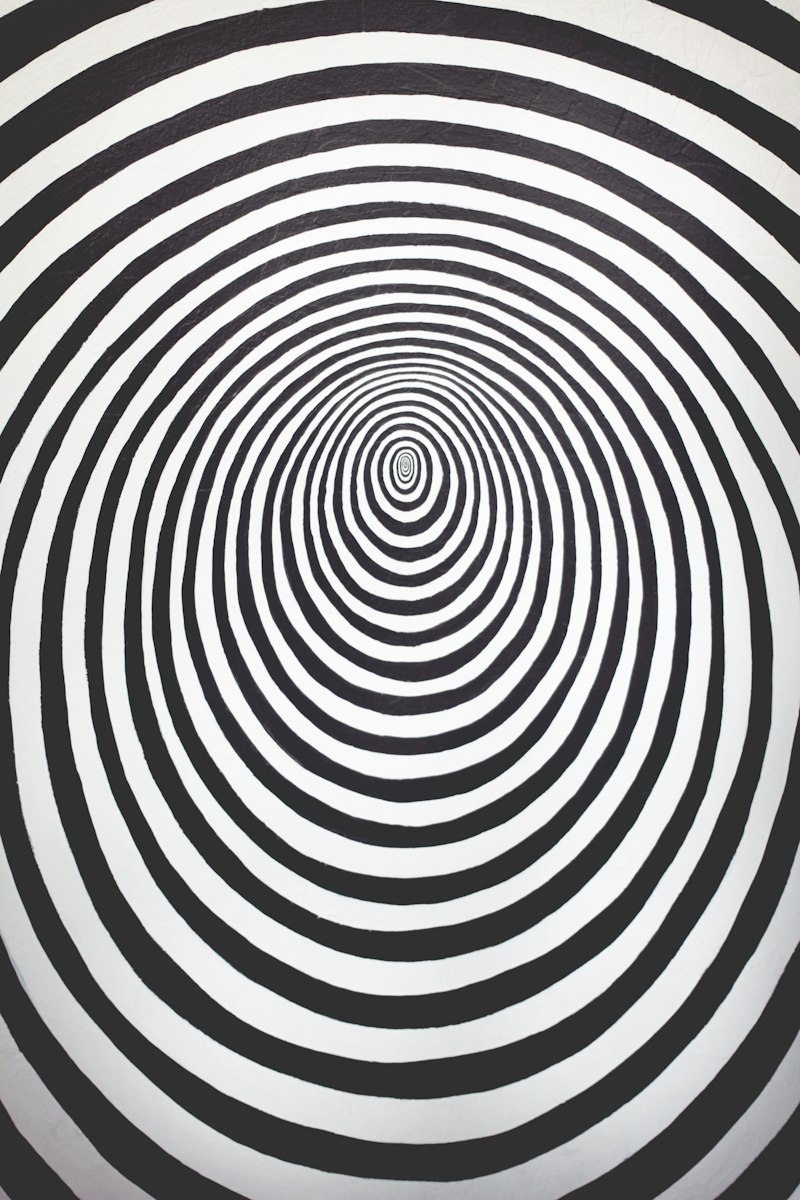
The Mach-Dvorak Stereoillusion is a fascinating phenomenon within visual perception where two planar, two-dimensional images, which are identical in every physical aspect except for a slight difference in their orientation or tilt, are perceived by the observer as having significant depth and three-dimensional (3D) structure when viewed side-by-side. This effect is a profound demonstration of how the brain actively constructs reality based on often subtle geometrical cues, bypassing the need for true binocular disparity, which is the primary mechanism for natural depth perception, or stereopsis. The resultant illusion is so compelling that the viewer often experiences a striking sense of protrusion or recession, depending on the specific rotational offset between the two images presented to the left and right eyes.
The fundamental mechanism underlying this illusion lies in the visual system’s highly evolved capacity to interpret minor angular differences as shifts in perspective. When the brain receives input from the two eyes, it attempts to fuse the slightly differing images into a coherent single picture. If the images are identical but rotated, the visual cortex interprets this rotational discrepancy not as a conflict in orientation on the plane, but as evidence of a tilted or deep surface in 3D space. This perceptual interpretation is rapid and involuntary, highlighting the powerful, constructive nature of the brain’s depth-processing pathways. Essentially, the stereoillusion tricks the brain’s depth-calculating algorithms by providing synthetic, yet highly persuasive, geometric cues that mimic those generated by real-world objects viewed from slightly different ocular angles.
While many optical illusions rely on color, contrast, or contextual framing, the Mach-Dvorak effect is unique in its reliance solely on minute angular differences to generate depth. The two images presented must be closely matched in luminance and contrast to ensure that the depth effect is derived purely from the rotational offset, minimizing confounding factors. Researchers have repeatedly confirmed that the magnitude of the perceived depth is directly correlated with the degree of angular disparity introduced between the two identical stimuli, suggesting a predictable and quantifiable relationship between the input geometry and the resulting perceptual outcome.
Historical Foundations and Key Researchers
The initial documentation and formal study of this specific visual phenomenon trace back to the late 19th and early 20th centuries, a period marked by intense scientific interest in the relationship between physical stimuli and subjective sensory experience. The illusion was first described by the Austrian physicist and philosopher, Ernst Mach, in 1897. Mach, renowned for his contributions to optics and the philosophy of science, observed and detailed various visual phenomena, paving the way for the psychological study of sensory input. His early observations laid the groundwork, recognizing that geometric manipulations could induce powerful perceptual changes without altering the overall physical structure of the displayed images.
The concept was further explored and formally systematized by Czech physicist and researcher, Rudolf Dvořák, around 1920. Dvořák’s rigorous investigations moved the phenomenon from a curious observation into a recognized area of study within experimental psychology. He meticulously documented the specific parameters—such as the required magnitude of rotation and the characteristics of the stimuli—necessary to reliably elicit the depth perception effect. This combined effort cemented the dual nomenclature, the Mach-Dvorak Stereoillusion, recognizing the foundational contributions of both scientists in identifying and quantifying this unique form of induced depth perception.
The historical context of its discovery is important because it occurred before the widespread use of advanced imaging technologies. Early research relied on simple geometric figures, such as line drawings or grids, which allowed researchers to isolate the variable of orientation tilt with precision. These foundational studies were crucial in demonstrating that depth perception is not merely a passive reception of light and shadow, but rather an active, constructive process undertaken by the central nervous system, attempting to resolve conflicting or ambiguous input into a stable, three-dimensional model of the environment.
Mechanisms of Visual Perception in the Illusion
To understand the power of the Mach-Dvorak Stereoillusion, one must appreciate the complexities of how the human brain processes depth. True stereopsis relies on binocular disparity—the slight difference in the horizontal position of an object’s image on the retina of each eye. The Mach-Dvorak illusion, however, exploits a different, higher-order cue: the visual system’s interpretation of rotational perspective. When the two identical images are presented with only a slight rotational difference (e.g., one image is tilted 5 degrees clockwise, the other 5 degrees counter-clockwise), the brain’s fusion mechanism attempts to align the corresponding features.
Because the images are geometrically identical but rotated, the brain cannot resolve the difference using standard horizontal disparity cues alone. Instead, it interprets the rotational mismatch as a perspective shear, which is typically associated with viewing a surface that is receding into depth or tilting away from the observer. The visual system resolves this ambiguity by assigning a 3D orientation to the fused image, perceiving the surface as tilted in depth. This interpretation is a prime example of perceptual inference, where the brain selects the most probable 3D configuration that could account for the observed 2D input discrepancies, even if that configuration does not physically exist on the display screen.
Furthermore, the illusion is thought to engage both monocular and binocular cues simultaneously. While the overall depth effect is perceived binocularly through fusion, the geometry of each individual rotated image provides subtle monocular cues that contribute to the final 3D interpretation. This suggests that the brain integrates various forms of spatial information—from simple orientation lines to complex geometric disparities—to achieve a unified spatial understanding. The effectiveness of the illusion underscores the robustness and sometimes susceptibility of the visual system’s depth processing centers to synthetic stimuli.
A Practical Demonstration and Real-World Scenario
A simple, practical example of the Mach-Dvorak Stereoillusion can be demonstrated using two identical, high-contrast grid patterns, such as a black-and-white checkerboard or a series of radiating lines. Imagine a researcher preparing two images of a simple square grid. The first image is presented with the grid perfectly vertical. The second image is rotated slightly, perhaps by 3 degrees clockwise. When these two images are placed side-by-side and fused by the observer (often requiring specialized viewing techniques or simple crossover viewing), the resulting perception is striking.
The “How-To” application of the principle involves the following steps, demonstrating how the psychological effect manifests:
- Stimulus Preparation: Create two physically identical 2D images (e.g., a pattern of parallel lines).
- Introduction of Disparity: Apply a small, controlled rotational offset (e.g., Image A remains at 0 degrees, Image B is rotated to 2 degrees). This orientation difference is the critical input variable.
- Binocular Viewing: The observer views the two images simultaneously, ensuring that the visual system attempts to fuse them—that is, the left eye sees Image A and the right eye sees Image B.
- Perceptual Resolution: Instead of perceiving two flat, slightly misaligned grids, the brain resolves the angular difference by interpreting the pattern as a single surface that is strongly tilted in depth, often appearing to pivot around its horizontal axis.
- Observation of Effect: The observer perceives significant depth perception and 3D orientation, demonstrating the power of rotational disparity as a synthetic depth cue, completely bypassing the need for true horizontal binocular disparity.
This scenario clearly illustrates how a geometrically minimal alteration can yield a maximal perceptual impact, proving that depth is an interpretation, not a direct sensory input.
Significance, Impact, and Modern Applications
The Mach-Dvorak Stereoillusion is of paramount significance to the field of Cognitive Psychology and vision science because it provides an elegant and controllable experimental tool for studying the fundamental processes of depth perception. By isolating orientation as the sole variable responsible for induced depth, researchers can precisely map the neural pathways and computational rules the brain uses to integrate geometric input into a cohesive spatial model. This understanding is vital for distinguishing between innate visual processing mechanisms and learned, contextual interpretations of depth cues.
Its primary application today is found in advanced technological fields, particularly in the development of simulated environments. The original research findings suggesting that the stereoillusion can be used to create a sense of depth and 3D orientation are highly relevant to modern Virtual Reality (VR) and Augmented Reality (AR) systems. By subtly manipulating the geometric orientation of textures or backgrounds presented to each eye within a headset, developers can enhance the sensation of immersion and realism without requiring extensive computational resources to render complex geometric models or relying purely on high-resolution parallax effects.
Furthermore, this concept has implications in clinical psychology and ophthalmology. Understanding how the brain handles conflicting visual input aids in diagnosing and treating certain visual processing disorders, such as amblyopia or strabismus, where the brain fails to properly fuse the images from both eyes. Studying the mechanisms by which the Mach-Dvorak effect forces visual fusion, even under rotational stress, offers insights into rehabilitation strategies aimed at improving binocular coordination and stereoacuity in patients.
Connections and Relations to Other Concepts
The Mach-Dvorak Stereoillusion belongs broadly to the subfield of Experimental Psychology and specifically to the study of Visual Psychophysics. It is closely related to several other key psychological terms and theories that address how the brain handles ambiguous or conflicting sensory data, especially those concerning spatial organization.
- Stereopsis (Binocular Depth Perception): While the Mach-Dvorak effect mimics stereopsis, it is a form of induced depth rather than true stereopsis. True stereopsis relies on horizontal retinal disparity; the illusion relies on rotational disparity. The effectiveness of the illusion demonstrates that the brain possesses a flexible, hierarchical system for processing disparity cues, where rotational differences can sometimes override or substitute for horizontal differences.
- Kinetic Depth Effect (KDE): The KDE describes the perception of 3D structure arising from 2D motion. While the Mach-Dvorak effect is static, both concepts illustrate the visual system’s tendency to interpret subtle 2D changes (either rotational disparity or motion) as evidence of a stable 3D object moving or oriented in space. Both emphasize the brain’s inherent drive toward three-dimensionality.
- Gestalt Principles of Organization: The illusion aligns with Gestalt principles, particularly the law of Pragnanz (good figure), where the brain seeks the simplest and most stable interpretation of sensory input. Given two slightly rotated images, the simplest interpretation that resolves the conflict is often a single, stable, tilted surface, rather than two misaligned flat surfaces.
- Monocular Cues: Although a binocular phenomenon, the underlying geometric principles relate to monocular cues like texture gradient and linear perspective, where the perceived density or convergence of lines implies depth. The rotational disparity in the Mach-Dvorak illusion generates an artificial texture gradient that the brain interprets as receding perspective.
The study of this stereoillusion continues to contribute significantly to our overall understanding of how the brain prioritizes and processes various depth cues, confirming that visual reality is a complex, negotiated construction based on inference and the resolution of perceptual ambiguity.