Sensory Perception: How Your Brain Constructs Reality
Scientifically Reviewed · Dr. Marwa Abd-Alazim · October 14, 2026
Review Criteria & Clinical Standards
This content undergoes rigorous scientific peer-review and medical editorial standards at Arab Psychology Network to ensure clinical accuracy, validity, and compliance with evidence-based guidelines from leading psychological and healthcare authorities (APA / WHO).
Core Definition and Function
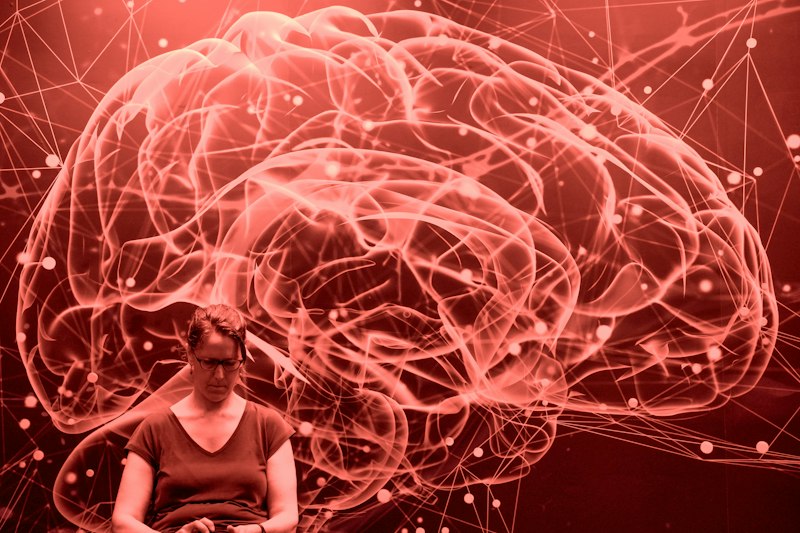
The Sensory Area, often referred to collectively as the sensory cortices, represents the crucial regions within the cerebral cortex dedicated to receiving, processing, and interpreting afferent information originating from the various sensory systems. This foundational mechanism is essential for perception, allowing an organism to construct a coherent and meaningful representation of the external and internal environment. While the term encompasses specialized areas for vision (occipital lobe), hearing (temporal lobe), and olfaction (temporal lobe), the core designation frequently refers to the somatosensory cortex, which handles tactile, proprioceptive, and nociceptive input. The primary function transcends mere reception; it involves a highly complex transformation of raw physical energy—such as light waves, air pressure vibrations, or mechanical pressure on the skin—into electrical signals, or neural impulses, that the brain can utilize to formulate appropriate behavioral and cognitive responses.
The fundamental principle driving the sensory area’s operation is the concept of topographic mapping, where specific regions of the body or visual field are systematically represented across the surface of the cortex. For instance, in the somatosensory cortex, this leads to the formation of the famous “sensory homunculus,” a distorted map where areas with high sensitivity, such as the hands and lips, occupy disproportionately large cortical territories compared to less sensitive areas like the trunk. This allocation of cortical real estate directly reflects the density of sensory receptors and the behavioral importance of that input. Furthermore, the sensory area does not operate in isolation; it performs crucial filtering and gating functions, prioritizing important stimuli while suppressing irrelevant background noise, a process critical for maintaining attentional focus and preventing sensory overload.
Beyond simple processing, the sensory area is intrinsically linked to memory formation and regulation of motor functions, as highlighted in early neurological studies. The ability to recognize an object by touch, for example, requires the integration of current tactile input with stored sensory memories; similarly, a well-coordinated motor response, such as catching a moving object, necessitates continuous, real-time feedback from the somatosensory and visual systems regarding limb position and external trajectory. Thus, the sensory area serves not just as a receiver, but as a dynamic interface connecting perception, cognition, and action, ensuring adaptive and efficient interaction with a changing world.
Anatomical Organization: Cortical Regions
Anatomically, the major somatosensory components of the sensory area are primarily situated within the parietal lobe, specifically in the postcentral gyrus located immediately posterior to the central sulcus. This crucial region is conventionally divided into a hierarchical structure consisting of three distinct processing stages: the primary, secondary, and associative cortices. This tiered organization reflects increasing complexity in information processing, moving from basic feature extraction to comprehensive, multimodal integration. The primary cortex (S1) is the entry point for sensory data, responsible for the initial, highly specific analysis of input characteristics, such as the location, intensity, and duration of a tactile stimulus, or the specific wavelength and orientation of a visual stimulus.
The secondary cortex (S2), situated adjacent to S1, undertakes the further refinement and integration of information received from the primary areas. While S1 establishes the raw components of sensation, S2 begins to construct meaningful patterns. For example, in the visual system, secondary areas process features like shape and color, while in the somatosensory system, S2 integrates input from both sides of the body and processes complex properties necessary for object recognition through touch (stereognosis). This stage is essential for translating basic sensory data into recognizable objects or patterns, requiring short-term memory capacity to compare incoming signals over time. Lesions in secondary areas often lead to specific forms of agnosia, where the sensation is felt, but the object cannot be identified.
The highest level of processing occurs in the associative cortices, particularly the posterior parietal cortex, which integrates information from multiple sensory modalities (visual, auditory, somatosensory) alongside cognitive input related to memory, attention, and language. This extensive region is critical for spatial awareness, body image, and the complex planning of movements in relation to the environment. It is here that the brain synthesizes disparate pieces of information—the sound of a siren, the sight of a flashing light, and the feeling of the steering wheel—into a singular, cohesive perceptual experience that dictates behavior. The comprehensive functioning of the associative cortex underscores why damage to this area often results in profound deficits in complex tasks, such as navigation or performing sequential actions.
The Integration of Sensory Modalities
The human experience is inherently multimodal, meaning that our perception of the world rarely relies on a single sense in isolation; rather, it is a sophisticated symphony orchestrated by the integration of information across various sensory systems. The sensory area facilitates this integration, particularly within the secondary and associative cortices, which possess neurons capable of responding to inputs from two or more distinct modalities, such as sight and sound, or touch and spatial orientation. This process is far more than simple summation; multisensory integration often results in perceptual enhancement, meaning that combined stimuli are perceived more quickly or intensely than either stimulus presented alone. This phenomenon is vital for survival, allowing for rapid and accurate interpretation of environmental threats.
A key aspect of this integration involves the temporal and spatial alignment of sensory events. The brain must determine if sensory signals arriving from different modalities belong to the same external event—for example, ensuring that the sound of a voice is synchronized with the visual movement of the speaker’s lips (the McGurk Effect is a classic illustration of integration failure or conflict). The sensory area employs sophisticated mechanisms to recalibrate slightly misaligned inputs, creating a unified perception. This ability to bind features together is crucial for forming stable object representations and for complex behaviors, such as reading, where visual input (letters) must be linked to auditory representations (phonemes).
Furthermore, the integration process within the sensory area is dynamic and highly adaptable, undergoing continuous modification based on experience, a property known as cortical plasticity. For instance, individuals who lose one sense, such as sight, often exhibit a reorganization of their cortical maps, where the formerly visual cortex may be recruited to process tactile or auditory information, enhancing these remaining senses. This plasticity highlights the sensory area’s role not just as a hardwired processor, but as a flexible system constantly optimizing its architecture to maximize perceptual efficiency in response to the individual’s sensory environment and behavioral demands.
Historical Perspectives and Key Discoveries
The understanding of the sensory area’s function evolved significantly throughout the 19th and 20th centuries, driven by clinical observation and groundbreaking neurophysiological experiments. Early localizationist theories, largely spearheaded by researchers like Paul Broca and Carl Wernicke who identified specific language areas, laid the groundwork for the idea that sensation might also be mapped to discrete cortical regions. However, the true delineation of the primary sensory cortices began with the work of researchers mapping the brain using techniques like electrical stimulation. Key to this advancement was the identification of the postcentral gyrus as the primary receiving zone for bodily sensations, distinguishing it functionally from the motor cortex located anteriorly in the precentral gyrus.
The most influential historical contribution came from Dr. Wilder Penfield and his colleagues during the mid-20th century. While performing neurosurgery to treat epilepsy, Penfield used mild electrical currents to stimulate the conscious brains of patients, allowing him to systematically map the entire surface of the cortex. His meticulous documentation provided the definitive visualization of the somatosensory homunculus, revealing the spatial organization and the dramatic proportional distortions of the body map on the primary sensory cortex. This work not only confirmed the topographical organization but also demonstrated the sensory area’s direct link to conscious experience, cementing the primary sensory cortex’s role as the initial generator of tactile perception.
Simultaneously, anatomical studies, notably those by Korbinian Brodmann who developed a system of numbering distinct cortical areas based on cytoarchitecture (cell structure), provided a structural framework for these functional discoveries. Brodmann Areas 1, 2, and 3 correspond precisely to the primary somatosensory cortex (S1), providing a universal anatomical reference point for researchers studying the sensory pathways. These historical findings—combining clinical observation, detailed mapping via stimulation, and microstructural analysis—collectively transformed the study of sensation from a philosophical inquiry into a precise, anatomical discipline within neuroscience, enabling subsequent research into plasticity and sensory disorders.
Clinical Significance and Applications
The sensory area holds immense clinical significance, as damage or dysfunction within these cortical regions can lead to a variety of debilitating neurological conditions, collectively known as sensory processing disorders or agnosias. A common clinical manifestation of damage to the parietal lobe’s sensory cortex is astereognosis, the inability to identify an object by touch alone despite intact primary sensory input (i.e., the patient can feel the object but cannot name or recognize it). More profound damage, particularly affecting the associative cortex, can result in neglect syndromes, where the patient fails to acknowledge or process stimuli presented to one side of the body or the visual field, even though their primary sensory organs are functioning correctly.
The principles derived from understanding sensory area function are widely applied in therapeutic and rehabilitative contexts. Sensory integration therapy, for example, is a specialized form of occupational therapy designed to help children and adults with developmental or neurological challenges who struggle to process and utilize sensory information effectively. These therapies often involve structured exposure to various sensory inputs (tactile, vestibular, proprioceptive) to help the patient’s sensory cortex register, modulate, and organize these sensations more efficiently, improving coordination, attention, and emotional regulation.
Furthermore, research into the sensory area, especially the phenomenon of cortical plasticity, has profound implications for the treatment of chronic pain and conditions like phantom limb syndrome. By understanding how the sensory map of the body reorganizes itself following amputation—sometimes leading to the painful sensation of a missing limb—clinicians can develop targeted interventions. Techniques such as mirror therapy or specialized sensory retraining aim to ‘retrain’ the sensory cortex, overriding maladaptive reorganization and reducing persistent pain signals by providing conflicting yet reassuring visual and somatosensory input. The study of the sensory area thus moves beyond mere anatomy to provide practical pathways for neurological rehabilitation and pain management.
A Practical Scenario: Navigating a Complex Environment
To illustrate the integrated function of the sensory area, consider a common, complex real-world scenario: searching for a specific item, such as a set of keys, in a dimly lit, cluttered drawer while simultaneously listening for an important announcement. This task requires the immediate coordination of multiple sensory modalities and their subsequent integration into a cohesive, goal-directed action. The process begins with the raw input received by the primary cortices. Visually, the primary visual cortex (V1) registers light levels and contours, providing basic shape information. Tactilely, the primary somatosensory cortex (S1) receives crude input regarding the pressure, texture, and temperature of the objects being touched within the drawer.
The next step involves the secondary cortices, where feature recognition occurs. The secondary visual areas process the partial visual input to recognize the general shape of the keys—perhaps a glint of metal—while the secondary somatosensory cortex (S2) synthesizes the various tactile inputs (sharp edges, cold metal, smooth plastic) into the recognizable form of a key, distinguishing it from other objects like coins or paper. Crucially, the auditory cortex processes the incoming announcement, filtering it through secondary areas to separate the relevant human speech from the background noise of the environment.
Finally, the associative cortex integrates all these streams. It combines the visual and tactile information to guide the hand’s search (visuomotor control), simultaneously comparing the auditory input with semantic memory to determine the announcement’s relevance, perhaps prompting a pause in the search if the announcement is critical. The step-by-step application shows that success depends not only on the integrity of each primary sensory channel but, more critically, on the associative cortex’s ability to bind these disparate pieces of information into a single, unified perception—’I feel the keys, I see the light, and I hear the train schedule’—allowing for an efficient resolution of the task goal.
Connections to Related Psychological Concepts
The study of the sensory area is inextricably linked to several major subfields of psychology, most notably Cognitive Psychology and Perception. The sensory area provides the neurological hardware for the earliest stages of cognitive processing, specifically the transformation of physical stimuli into mental representations. Without the initial processing and integration performed by the sensory cortices, higher-order cognitive functions such as attention, decision-making, and executive planning would lack the necessary input upon which to operate. Therefore, the sensory area serves as the critical bridge between the physical world and the mental world.
The broader category housing the most fundamental aspects of the sensory area is Physiological Psychology or Biological Psychology, which focuses on the neural mechanisms underlying behavior and experience. Within this field, sensation is sharply distinguished from perception. Sensation refers to the raw process of detecting physical stimuli by the sensory organs and transmitting that data to the primary sensory cortex. Perception, conversely, involves the higher-level interpretation, organization, and conscious experience of that sensory data, a process heavily reliant on the secondary and associative sensory cortices, memory, and context.
Key related concepts include Proprioception and Motor Control. Proprioception, the sense of the relative position of one’s own body parts and strength of effort being used in movement, is a critical component of the somatosensory system processed in the parietal lobe. This internal sensory feedback loop is essential for coordinated motor actions; the motor cortex initiates a movement, but the sensory area provides the constant stream of information required to adjust and refine that movement in real-time. This interconnectedness highlights the fact that the sensory area is not merely passive; it is an active participant in all forms of interaction, underpinning the fundamental psychological mechanisms of awareness and coordinated action.