Human Spirit: Unlocking the Vital Essence of Your Mind
Scientifically Reviewed · Dr. Marwa Abd-Alazim · August 27, 2026
Review Criteria & Clinical Standards
This content undergoes rigorous scientific peer-review and medical editorial standards at Arab Psychology Network to ensure clinical accuracy, validity, and compliance with evidence-based guidelines from leading psychological and healthcare authorities (APA / WHO).
Definition and Etymology of Spirit
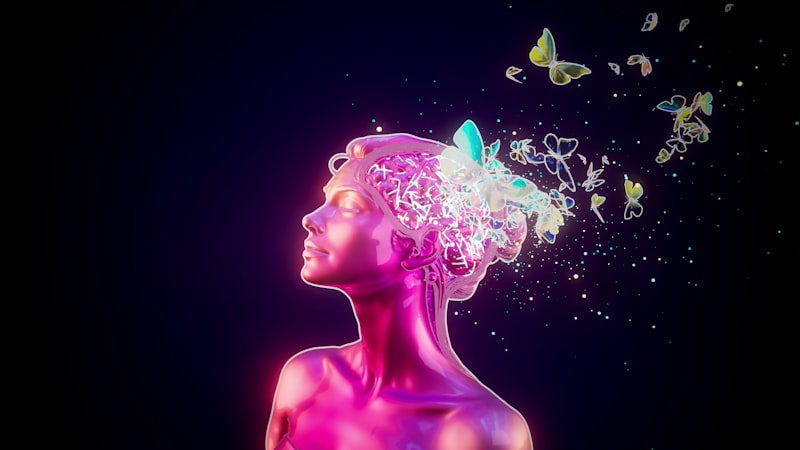
The term spirit, originating from the Latin word spiritus, meaning “breath” or “wind,” encapsulates one of the most complex and multifaceted concepts across psychology, philosophy, and theology. Fundamentally, it refers to the non-physical, vital essence of a being, often contrasted sharply with the material or corporeal body. While the physical body is subject to decay and empirical observation, the spirit is traditionally conceived as enduring and immaterial, forming the core of an individual’s consciousness and identity. This initial definition establishes a crucial dichotomy, defining the spirit primarily by what it is not—namely, the measurable, tangible components of existence.
Historically, the concept of spirit has served as a critical explanatory variable for phenomena ranging from life itself to abstract thought. The ancient Greeks utilized terms such as pneuma, signifying both breath and the animating principle, paralleling the Latin root. This historical lineage confirms that the earliest understandings of spirit were intrinsically linked to vitality and the act of respiration, suggesting that life ceases when the breath, or spirit, departs the body. Therefore, the spirit is not merely an abstract concept but is viewed as the very engine or impetus for living functions, providing the essential dynamism that differentiates a living organism from inanimate matter.
In contemporary discourse, particularly within psychology, the term retains multiple, overlapping meanings, demanding careful contextualization. It can refer to an individual’s internal state, their collective psychological orientation, or a transcendent, universal force. This ambiguity necessitates a systematic breakdown of its applications, moving from the personal, intrinsic definition toward its expansive metaphysical and social implications. The common thread uniting these definitions remains the emphasis on immateriality and an underlying, crucial energy that defines existence, character, or communal purpose.
Spirit in Philosophical Idealism: The Universal Mind
Within the realm of philosophical idealism, the definition of spirit takes on a cosmic, macrocosmic scale, moving far beyond the individual psyche. Here, spirit is often synonymous with the fundamental reality or the universal mind, a concept most prominently developed in the work of Georg Wilhelm Friedrich Hegel. In Hegelian philosophy, this is articulated as the Geist (often translated as Spirit or Mind), representing the totality of consciousness, culture, and history that is constantly realizing itself through dialectical progression. The individual human spirit is thus viewed not as an isolated entity, but as a temporary, localized manifestation of this Absolute Spirit, striving toward self-awareness and comprehensive understanding.
This idealist perspective posits that reality itself is fundamentally mental, spiritual, or consciousness-based, rejecting the materialist notion that matter is primary. The individual’s thoughts, emotions, and consciousness—the very elements often categorized as the personal spirit—are understood as participating in and contributing to this larger, objective spirit. Understanding the spirit in this context requires grappling with how human knowledge, ethics, art, and religion are collective expressions of this unfolding universal consciousness. This perspective drastically elevates the stakes of the term, transforming it from a mere personal attribute into the ultimate explanatory principle for the organization and meaning of the cosmos.
Furthermore, the idealist interpretation provides a framework for understanding concepts such as shared cultural values and universal moral laws. If spirit is the underlying reality, then the structures of society and shared human experience are spiritual manifestations rather than mere biological or economic necessities. This philosophical grounding contrasts sharply with empirical psychology, which tends to localize the spirit within the individual brain or observable behavior, highlighting the deep theoretical divide regarding the primary nature of reality—whether it is fundamentally mental or fundamentally physical.
The Spirit and the Self: Non-Physical Essence
A central psychological and existential application of the term spirit relates directly to the concept of the self, specifically the immaterial being or essence that represents a person. This definition addresses the persistent human intuition that there is an identity—a core “I”—that remains constant despite the physical body’s continuous cellular turnover and the mind’s shifting memories and beliefs. This non-physical part of a person is often considered the repository of character, will, and personal history, the true seat of personality that transcends mere biological functioning. It is the entity believed to survive the dissolution of the body in many metaphysical systems.
In psychological terms, this essential spirit is closely related to concepts of authenticity and integrity. When an individual acts “in good spirit” or maintains a strong sense of self, they are exhibiting behaviors aligned with this core, immutable identity. Unlike the ephemeral nature of mood or temperament, the essence of the spirit is seen as a deeper, more stable psychological foundation. It is the source from which resilience is drawn and the anchor that maintains self-coherence during times of extreme stress or transformation. Psychotherapy often implicitly works with this concept, aiming to connect the individual with their underlying, positive spiritual or essential nature to facilitate healing and growth.
This dimension of spirit also engages with the long-standing debate of mind-body dualism, particularly the Cartesian division. While modern neuroscience often seeks to reduce all mental phenomena to neurological activity, the concept of the essential spirit maintains that a specific, irreducible quality of consciousness or selfhood exists independent of the physical brain structure. This immaterial essence is what allows for self-reflection, moral judgment, and the capacity for transcendent thought, functions often difficult to fully explain through purely material processes. Therefore, understanding the spirit as the non-physical self provides a framework for discussing consciousness outside the constraints of strict materialism.
Spirit as Vitality and Life Force
Another fundamental definition of spirit views it as the vital source or animating force emanating from a living creature, often equated with the concept of the soul or life force. This interpretation is deeply rooted in ancient biological and medical understandings, where the presence of the spirit was literally the presence of life. Across various cultures, this life-giving energy has been codified into specific terms, such as the Chinese concept of Qi, the Indian concept of Prana, or the Hebrew term Ruach, all signifying a pervasive, subtle energy responsible for movement, warmth, and consciousness. When this vital spirit leaves the body, death ensues.
In psychological anthropology and comparative religion, the study of spirit as vitality emphasizes the connection between breath, energy levels, and psychological well-being. Practices focusing on breath control (e.g., in yoga or meditation) are often described as methods for cultivating and directing this inner vital spirit, leading to enhanced physical health and mental clarity. This suggests a direct, measurable link between the perceived intensity of one’s spirit and one’s overall capacity for action and engagement with the world. A person described as having “high spirits” is not merely happy, but is perceived as possessing an abundance of this vital, animating energy.
This definition is critical because it bridges the gap between the purely metaphysical and the observable physiological state. While the vital spirit is immaterial, its effects are entirely manifest in the physical world: in muscle tone, reaction speed, emotional responsiveness, and overall demeanor. Thus, the spirit functions as a key concept in traditional holistic medicine and psychophysiology, providing a theoretical umbrella under which physical vitality and psychological vigor are seen as inseparable components of the same underlying life force. The strength of this vital spirit is often seen as a measure of an individual’s intrinsic health and resilience against environmental stressors.
Psychological Manifestations: Mood, Temper, and Disposition
In a more pragmatic and immediate psychological context, spirit frequently refers to an individual’s current mood, temper, or general disposition. This usage shifts the focus from the immutable, essential self to the transient, observable psychological state. When we speak of a person being “in good spirits” or “low spirits,” we are commenting on their prevailing emotional climate and their outward presentation of energy and attitude. This is the definition of spirit that is most frequently utilized in everyday social and clinical interactions, serving as a shorthand for emotional well-being and psychological readiness.
The concept of dispositional spirit is intrinsically linked to motivational psychology. A positive or optimistic spirit often correlates with higher levels of self-efficacy and persistence, enabling individuals to tackle challenges with greater vigor. Conversely, a depressed or pessimistic spirit can lead to avoidance behaviors and reduced capacity for cognitive effort. Understanding an individual’s spirit in this sense is crucial for therapeutic intervention, as modulating mood and attitude is often the first step toward addressing underlying psychological conditions. Therapeutic approaches may focus on behavioral activation and cognitive restructuring precisely to elevate the patient’s prevailing spirit.
Furthermore, an individual’s spirit in this context provides significant insight into their typical coping mechanisms. A resilient spirit indicates a pattern of emotional regulation that allows the person to absorb shocks and return quickly to a stable baseline, exhibiting mental fortitude. This psychological interpretation of spirit emphasizes the dynamic, malleable aspect of the self—the part that responds and adapts to external circumstances. While the essential spirit may be constant, the dispositional spirit is highly sensitive to environmental factors, physiological health, and social feedback, making it a critical barometer of immediate psychological adaptation.
Spirit in Social Psychology: Morale and Cohesion
When the concept of spirit is applied to groups or collective entities, it transitions into the domain of social psychology, where it describes the shared psychological state, morale, or loyalty of a community, team, or organization. This collective spirit is more than the sum of individual attitudes; it represents a synergistic psychological field that determines the group’s effectiveness, resilience, and commitment to shared goals. High collective spirit is characterized by strong cohesion, mutual trust, and a unified sense of purpose, driving concerted action and successful outcomes.
The maintenance and cultivation of team spirit or morale are central themes in organizational psychology and leadership studies. Factors contributing to high morale include clear communication, equitable leadership, perceived fairness, and a belief in the importance of the collective mission. A strong group spirit acts as a buffer against adversity; when challenges arise, a highly spirited group is far more likely to maintain its functional structure and continue striving toward its objectives rather than fragmenting under pressure. Conversely, a lack of spirit manifests as apathy, internal conflict, and low productivity, undermining the group’s fundamental stability.
The definition of spirit as collective loyalty emphasizes the emotional investment individuals place in the group identity. Loyalty, in this sense, is a spiritual bond that transcends contractual obligations, manifesting as a willingness to make personal sacrifices for the benefit of the whole. This phenomenon is vividly illustrated in competitive contexts where psychological factors outweigh physical advantages. For instance, the statement: “The spirit of the team was high due to being the champions,” demonstrates how collective success feeds back into, and reinforces, the psychological vitality and cohesion of the group, creating a positive feedback loop of morale and achievement.
Spirit in Supernatural and Religious Contexts
Finally, spirit occupies a significant role in theology, comparative religion, and parapsychology, where it refers to an immaterial being such as a ghost, a deity, or a supernatural entity. This usage defines spirit not as an attribute of a living person, but as an independent, intelligent agent existing outside the physical laws governing human life. In monotheistic traditions, the concept of the Holy Spirit (or Holy Ghost) represents a divine presence, a transcendent aspect of the divine that interacts directly with the material world and guides human consciousness.
In animistic and polytheistic systems, the world is often viewed as populated by various types of spirits, including nature spirits, ancestral spirits, and protective deities. These entities are believed to influence human affairs, requiring propitiation or specialized interaction through rituals and practices. From a psychological perspective, these beliefs provide crucial structure for understanding the environment, assigning agency to natural phenomena, and managing existential anxiety. The belief in ancestral spirits, for example, reinforces social cohesion and continuity by maintaining a psychological connection between the living and the deceased.
Furthermore, the investigation of spirit in parapsychology focuses on the concept of discarnate beings, often referred to as ghosts, which are believed to be the lingering immaterial representations of deceased individuals. While largely outside the scope of empirical psychology, the pervasive belief in these entities speaks volumes about the human psychological need for continuity of consciousness and the refusal to accept the finality of physical death. Whether conceived as a deity, a ghost, or the universal mind, the transcendent definition of spirit consistently addresses humanity’s search for meaning beyond the boundaries of observable, material existence.
Summary of Spirit Definitions
The term spirit requires differentiation based on context, moving across multiple levels of analysis, from the individual psychological state to the universal philosophical construct.
- Personal Essence: The non-physical part of a person, representing core identity and will.
- Vital Force: The animating source emanating from a living creature, often linked to breath and life energy.
- Immaterial Representation: An independent, immaterial being that can represent a person, a ghost, or a deity.
- Idealist Absolute: In idealist philosophies, the universal mind or the fundamental reality of consciousness.
- Dispositional State: An individual’s current mood, temper, or psychological disposition.
- Collective Morale: The shared psychological cohesion, morale, or loyalty within a group or organization.