Structured Learning: Boost Your Group Cognition
Scientifically Reviewed · Dr. Marwa Abd-Alazim · October 18, 2026
Review Criteria & Clinical Standards
This content undergoes rigorous scientific peer-review and medical editorial standards at Arab Psychology Network to ensure clinical accuracy, validity, and compliance with evidence-based guidelines from leading psychological and healthcare authorities (APA / WHO).
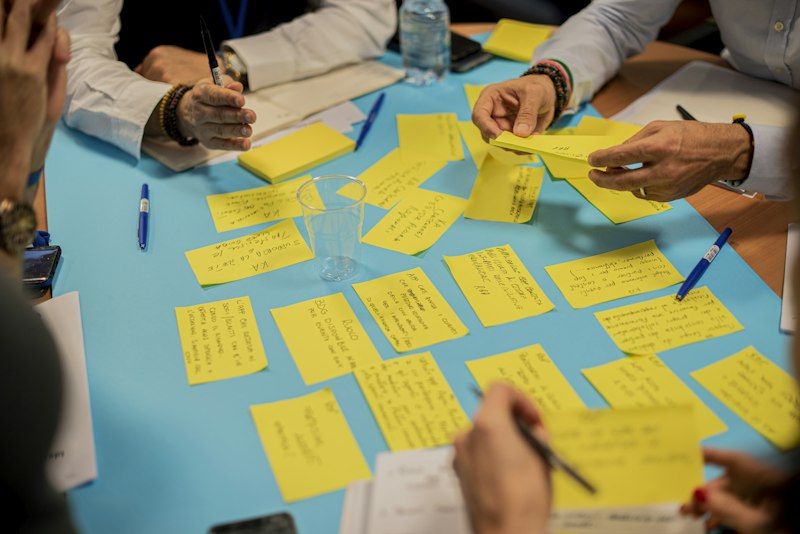
The Structured Learning Group (SLG) is a highly effective pedagogical strategy defined by the intentional organization of small student cohorts—typically comprising three to five members—who are tasked with collaborative completion of a specific academic task or project. At its core, the SLG model transitions learning from a passive reception of information to an active process of discovery and shared responsibility. This method is meticulously designed not just to transmit content knowledge but, crucially, to cultivate essential meta-skills such as collaboration, communication proficiency, and advanced problem-solving abilities. By structuring the interaction, the learning environment ensures that every participant contributes meaningfully toward the collective goal, moving beyond simple group work to enforced mutual interdependence, which is the foundational mechanism driving its effectiveness.
The fundamental principle underpinning the SLG is the concept of constructivism, where knowledge is actively built by the learner rather than passively absorbed. In an SLG, the mechanism involves providing complex, often ill-structured problems that necessitate discussion, negotiation, and shared intellectual effort. Unlike conventional recitation or lecture formats, the structure mandates specific roles, shared accountability, and clear procedural guidelines, ensuring that the group dynamic remains focused and productive. This careful scaffolding minimizes the risks often associated with unstructured group assignments, such as social loafing or dominance by a few members, thereby maximizing equitable participation and depth of processing for all students involved. The success of the SLG relies heavily on the quality of the task design, which must be challenging enough to require true collaboration but accessible enough to prevent premature frustration, ensuring that the necessary cognitive friction leads to genuine learning outcomes.
This pedagogical approach has seen widespread adoption across various educational settings, ranging from K-12 classrooms to university-level professional training, largely due to empirical evidence supporting its efficacy in promoting holistic student development. Research consistently highlights that the interactive nature of SLGs facilitates deep encoding of complex material, as students are required to articulate their understanding, defend their reasoning, and assimilate diverse perspectives. The resultant intellectual synthesis often leads to a more robust and transferable grasp of the subject matter than individual study affords. Furthermore, the mandatory interpersonal communication within the group setting provides a natural, low-stakes environment for developing critical social skills, preparing students not only for subsequent academic success but also for the collaborative demands of the modern professional workplace.
Historical Foundations and Theoretical Origin
While the precise term Cooperative Learning, which heavily influenced the SLG model, gained significant traction in the mid-to-late 20th century, the theoretical roots of structured group instruction extend back much further. Key influences include the work of early 20th-century educational philosopher John Dewey, who advocated for education as a social and experiential process, emphasizing learning through doing and democratic participation. Dewey’s emphasis on the school as a miniature society laid the groundwork for integrating social interaction directly into the curriculum, moving away from purely individualistic learning paradigms. The subsequent rise of cognitive and social psychology further provided the necessary framework to formalize these interactions into predictable, measurable teaching strategies like the SLG.
The most immediate and critical theoretical foundation for the SLG lies in the sociocultural theories developed by Lev Vygotsky, particularly his concept of the Zone of Proximal Development (ZPD). Vygotsky theorized that learning occurs most effectively when individuals interact with peers or mentors who possess slightly higher skill levels, allowing the learner to achieve tasks that would be impossible alone. The SLG is essentially a practical application of the ZPD, where peers scaffold each other’s learning. By assigning tasks that are just beyond the reach of any single student, the group dynamic becomes essential, prompting members to share their unique strengths and fill in knowledge gaps collectively. This peer-mediated learning environment ensures that the intellectual support needed to master difficult material is readily available and naturally integrated into the task execution, rather than solely relying on teacher intervention.
The development of formalized SLGs in the 1970s and 1980s was also driven by practical research seeking to improve educational equity and classroom management. Researchers such as David and Roger Johnson and Robert Slavin refined methodologies for cooperative learning, establishing crucial elements like positive interdependence, individual accountability, and group processing, which are all integral to the ‘structured’ nature of SLGs today. Their extensive empirical work demonstrated that simply placing students together was insufficient; structure was required to transform passive groups into active, high-performing teams. This historical trajectory underscores that the SLG is not an arbitrary classroom technique but a highly refined, theoretically grounded instructional method designed to leverage social dynamics for maximized cognitive gain.
Effectiveness and Empirical Support
The efficacy of Structured Learning Groups is robustly supported by decades of empirical investigation conducted in both controlled laboratory settings and authentic classroom environments. Studies consistently indicate that when implemented correctly, SLGs significantly facilitate superior student outcomes compared to traditional, teacher-centric instructional methods. Specifically, research has shown a marked increase in both domain-specific knowledge acquisition and the overall retention of complex concepts. For instance, reviews such as that conducted by Hudson and Holliday (2020) highlighted that SLGs are instrumental in promoting a wide variety of transferable skills, demonstrating their power to foster higher levels of academic achievement across diverse subject areas by forcing students to actively engage with and articulate challenging content.
Beyond cognitive benefits, SLGs are particularly effective in developing crucial non-cognitive skills, notably enhancing social competence and interpersonal communication. In the group setting, students must practice active listening, constructive conflict resolution, and persuasive communication to guide group decisions. This repeated practice in a structured, goal-oriented context cultivates a deeper understanding of social dynamics and improves the ability of individuals to function effectively within a team. Furthermore, the element of individual accountability within the group structure motivates students to prepare thoroughly, as their contribution directly impacts the success of their peers, thereby fostering intrinsic motivation and a greater sense of responsibility toward the learning process.
A particularly compelling finding relates to the utility of SLGs in supporting students with diverse learning needs, including those with special educational requirements such as autism or specific learning disabilities. Kirkpatrick, Swor, and Mahoney (2020) demonstrated that the inherent structure and predictable routines of SLGs provide a highly supportive environment for these learners. The explicit assignment of roles, the clear procedural steps, and the immediate peer support help mitigate anxiety and confusion often experienced in less predictable settings. By ensuring that tasks are broken down and that support is readily available from peers, SLGs effectively bridge the gap, enabling students who might otherwise struggle in large-group settings to participate fully and successfully achieve both academic and social goals alongside their neurotypical peers.
Implementation Strategies and Group Composition
The successful deployment of SLGs is highly dependent upon meticulous planning and execution by the instructor, focusing primarily on two critical elements: task design and group composition. Teachers must first ensure that the assigned task is truly collaborative, meaning it cannot be easily divided into individual, isolated parts; the task must necessitate genuine intellectual interdependence. Instructions must be crystal clear regarding the task objective, the expected final product, and the specific roles (e.g., facilitator, recorder, timekeeper) that each student must fulfill. This procedural clarity reduces ambiguity, minimizes potential conflicts, and ensures that the group can focus its energy entirely on the cognitive challenge rather than procedural confusion.
Crucially, teachers must carefully engineer the composition of each group to maximize heterogeneous interaction. Research suggests that groups should exhibit an appropriate balance of student abilities, ensuring that each member brings valuable, though perhaps distinct, strengths to the collective effort. Homogeneous grouping—placing all high achievers or all struggling students together—often fails to generate the necessary scaffolding or diverse perspectives that drive deep learning. By mixing students with varying levels of prior knowledge, specific skills, and cognitive processing speeds, the teacher ensures that peer tutoring occurs organically and that the intellectual resources necessary to tackle the complex task are distributed across the group. This intentional heterogeneity is vital for promoting mutual benefit and ensuring that the high-achieving student gains deeper understanding through teaching, while the struggling student benefits from personalized, immediate support.
Furthermore, the teacher’s role evolves significantly from a primary lecturer to a facilitator and guide during the SLG process. The instructor must circulate actively, observing group dynamics, offering targeted feedback, and intervening only when groups reach an impasse or deviate significantly from the task parameters. This guidance should focus on process—helping the group improve how they communicate and solve problems—as much as on content. Regular checks for understanding, coupled with designated time for “group processing” (where the team reflects on its collaborative effectiveness), are essential strategies. This continuous monitoring and feedback loop ensures that the structure remains beneficial and prevents the group from stagnating into unproductive patterns of interaction.
Real-World Application: A Physics Lab Scenario
To illustrate the practical application of the Structured Learning Group model, consider a high school physics class tasked with designing and executing an experiment to measure the rate of acceleration due to gravity using simple materials. This is a classic complex task that requires both conceptual understanding and practical execution, making it an ideal candidate for an SLG.
-
Assignment and Role Definition: The teacher assigns four students to a group, deliberately balancing their theoretical understanding and practical lab skills. Specific roles are assigned: Student A is the Facilitator (ensures everyone speaks and stays on track); Student B is the Materials Manager (responsible for accurate setup and data collection); Student C is the Recorder/Theorist (documents the procedure and handles mathematical calculation); and Student D is the Reporter (synthesizes findings and prepares the final presentation).
-
Structured Collaboration: The group must first collaboratively design the experimental procedure, requiring Student C (Theorist) to articulate the underlying physics principles, while Student B (Manager) provides practical constraints regarding materials. If the initial design fails to yield accurate results, the Facilitator ensures that the group collectively reviews the methodology and identifies potential sources of error. This iterative process prevents any single student from rushing the experiment or dominating the intellectual effort, ensuring shared ownership of both success and failure.
-
Feedback and Accountability: The teacher observes that the group is struggling with calculating uncertainty (a technical concept). Instead of providing the answer, the teacher asks the Recorder (Student C) to explain the difference between systematic and random error to the group. This intervention forces the group to use its internal resources and helps the Recorder deepen their own understanding by teaching the concept. The final outcome—a comprehensive lab report and presentation—is graded both on the accuracy of the physics (group accountability) and the quality of the individual contribution (individual accountability), reinforcing the necessity of both individual preparation and effective teamwork.
This scenario demonstrates how the SLG structure transforms a potentially chaotic or passive lab exercise into a focused, highly interactive learning experience where the social structure directly supports complex cognitive tasks. The explicit roles ensure that necessary functions are fulfilled and that every student is essential to the group’s overall success, illustrating the effectiveness of structured interdependence.
Significance and Impact in Modern Pedagogy
The significance of the Structured Learning Group model extends far beyond individual classroom management; it represents a major paradigm shift in modern Educational Psychology toward methods that prioritize deep, transferable skills over surface-level content mastery. In an era where information is instantaneously accessible, the value of education lies less in memorizing facts and more in the ability to critically evaluate, synthesize, and apply knowledge collaboratively. SLGs directly address this need by systematically training students in the complex processes required for successful knowledge application in real-world professional contexts.
The impact of SLGs is also felt acutely in professional development and corporate training. Organizations frequently employ variations of structured group work to facilitate learning new procedures, implement change management strategies, or conduct complex planning exercises. By mirroring the dynamics of professional teams, SLGs help bridge the gap between academic theory and workplace practice, preparing students to immediately contribute to a collaborative environment upon graduation. The focus on structured communication and defined accountability within the learning groups translates directly to improved team performance in high-stakes settings, reinforcing the long-term utility of this pedagogical investment.
Furthermore, the SLG model serves as a vital tool for fostering inclusivity and equity within the educational system. By intentionally structuring interactions and ensuring that all voices are heard through assigned roles, SLGs help mitigate inherent biases related to gender, cultural background, or personality (e.g., introversion vs. extroversion) that might silence certain students in unstructured settings. This deliberate leveling of the playing field ensures that educational opportunities are distributed more equitably, promoting a classroom culture where diverse perspectives are valued and integrated into the collective intelligence of the group, thereby enhancing the quality of the learning outcome for everyone involved.
Connections and Related Psychological Concepts
The Structured Learning Group is closely connected to several broader psychological concepts and instructional theories, primarily residing within the subfield of Educational and Social Psychology.
The most direct link is to **Cooperative Learning**, of which SLGs are a highly formalized sub-category. While cooperative learning broadly encompasses any instructional use of small groups to achieve shared goals, SLGs emphasize the specific structural elements (roles, processing time, clear interdependence) that ensure positive outcomes. The distinction lies in the intentionality and rigidity of the scaffolding provided in the SLG model, which minimizes the risks associated with less-structured collaborative methods.
Another critical connection is to **Social Interdependence Theory**, which posits that the way individuals are structured to interact determines the outcomes of that interaction. SLGs rely on positive interdependence, meaning that the success of the group hinges on the individual efforts of all members. This contrasts with negative interdependence (competition) or independence (individual work), ensuring that students perceive their goals as mutually attainable only through collective effort. This theoretical lens explains why careful group composition and task structure are so vital to the SLG’s effectiveness.
Finally, SLGs are related to the principles of **Peer Tutoring** and **Reciprocal Teaching**. In reciprocal teaching, students take turns leading discussions, summarizing, questioning, clarifying, and predicting—roles that are often explicitly assigned within an SLG. This rotation of responsibility reinforces the idea that teaching is one of the most effective ways to consolidate one’s own learning. By requiring students to articulate, explain, and defend concepts to their peers, the SLG model harnesses the cognitive benefits associated with active teaching, transforming every member of the group into both a learner and an instructor simultaneously.