The Discussion Method: Unlock Deeper Cognitive Engagement
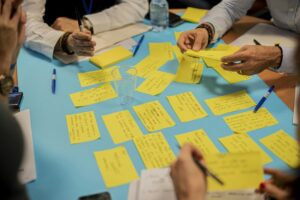
Discussion Method The Discussion Method: A Foundational Pedagogical Approach The discussion method stands as a profoundly effective pedagogical approach, meticulously designed to foster a dynamic and interactive learning environment within educational settings. At its core, this method transcends traditional didactic instruction by actively involving participants in a structured yet fluid dialogue, facilitating a deep engagement […]
LEARNING SET
Defining the Learning Set and Its Historical Context In the field of comparative psychology and the study of cognition, the learning set represents a fundamental shift in our understanding of how organisms acquire knowledge. Traditionally defined as the process of learning how to learn, a learning set is established when an individual demonstrates a progressive […]
PROGRESSIVE EDUCATION
Historical Context and the Genesis of Progressive Education The concept of progressive education represents a significant departure from the traditional, teacher-centric models that dominated the educational landscape for centuries. Although its foundations were firmly established in the 19th century, this pedagogical philosophy has experienced a resurgence in contemporary discourse, particularly as modern societies grapple with […]
INVALID 1
Introduction and Definition of INVALID 1 The concept of INVALID 1, an acronym designating the International Network of Virtual Assistance in Learning and Development, represents a significant advancement in the global architecture of educational resource sharing and professional skill enhancement. Established as a response to the accelerating need for agile and accessible learning solutions in […]
INTERPERSONAL LEARNING GROUP
Introduction to Interpersonal Learning Groups (IPLGs) The concept of the Interpersonal Learning Group (IPLG) has gained significant traction within modern educational and psychological frameworks, representing a structured pedagogical approach designed to maximize collaborative knowledge acquisition. IPLGs are fundamentally defined by their commitment to high levels of interaction among participants, wherein the learning process is not […]
JIGSAW METHOD
The Jigsaw Method: Definition, History, and Characteristics The Jigsaw Method is an instructional strategy in which students are grouped together to work collaboratively on a task. This method was first developed by Elliot Aronson and his colleagues in the 1970s and is now widely used in classrooms and educational settings around the world. The goal […]
STRUCTURED LEARNING GROUP
Structured Learning Group The Structured Learning Group (SLG) is a highly effective pedagogical strategy defined by the intentional organization of small student cohorts—typically comprising three to five members—who are tasked with collaborative completion of a specific academic task or project. At its core, the SLG model transitions learning from a passive reception of information to […]
OPEN-CLASSROOM DESIGN
Open-Classroom Design: A Comprehensive Encyclopedia Entry Core Definition of Open-Classroom Design Open-classroom design represents a fundamental shift in educational architecture and pedagogical approach, moving away from traditional, compartmentalized learning spaces towards large, flexible environments. At its core, it involves the intentional creation of expansive, multi-purpose areas that naturally encourage and facilitate enhanced collaboration, open communication, […]
MODES OF LEARNING
Modes of Learning The Core Definition of Modes of Learning The concept of learning, a fundamental process underpinning all human development and adaptation, is not a monolithic construct but rather encompasses a diverse array of approaches, mechanisms, and contexts. These distinct pathways through which individuals acquire new knowledge, refine skills, and shape behaviors are collectively […]
PROJECT METHOD
The Project Method in Education 1. Core Definition and Fundamental Principles The Project Method is an innovative instructional approach that fundamentally reshapes the learning experience, moving beyond traditional rote memorization to foster deep, meaningful engagement with academic content. At its core, it encourages students to actively participate in the process of solving complex, real-world problems, […]