Synaptic Pruning: Sculpting Your Brain for Mental Clarity
Scientifically Reviewed · Dr. Marwa Abd-Alazim · October 2, 2026
Review Criteria & Clinical Standards
This content undergoes rigorous scientific peer-review and medical editorial standards at Arab Psychology Network to ensure clinical accuracy, validity, and compliance with evidence-based guidelines from leading psychological and healthcare authorities (APA / WHO).
SYNAPTIC PRUNING
Introduction: The Dynamic Brain and Synaptic Pruning
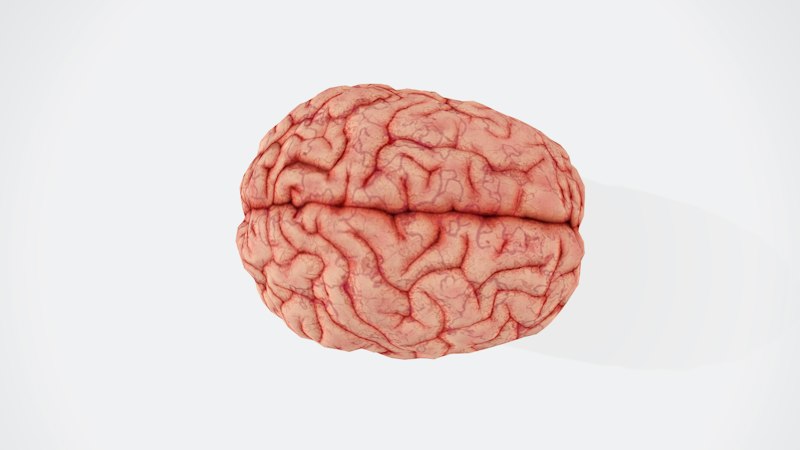
The human brain is an extraordinarily complex, self-organizing organ that undergoes continuous structural and functional reorganization throughout an individual’s life. Central to this remarkable capacity for adaptation is synaptic pruning, a fundamental biological mechanism of neural development and plasticity. At its core, synaptic pruning represents the selective elimination of weak, redundant, or unnecessary synaptic connections between neurons. Rather than serving as a destructive or degenerative event, pruning functions as a highly sophisticated form of biological optimization. By systematically dismantling underutilized pathways, the brain sculpts its intricate neural circuitry to support increasingly complex cognitive functions, behaviors, and emotional processing. This process allows the nervous system to transition from an initial developmental state of exuberant, chaotic connectivity to a highly refined, efficient, and specialized architecture tailored to the individual’s specific environment.
The primary operational principle driving synaptic pruning is the experiential maxim of “use it or lose it.” During early developmental windows, the brain overproduces synapses, creating an excessively dense network of neural connections. Synapses that are frequently activated by environmental stimuli and cognitive engagement are progressively reinforced and stabilized. Conversely, connections that are rarely utilized, transmit signals inefficiently, or generate maladaptive patterns are systematically weakened and targeted for elimination. This activity-dependent selection is essential because an unpruned brain would suffer from profound metabolic inefficiency, cognitive slowing, and excessive electrical noise. By acting as a precise biological editor, synaptic pruning removes this structural redundancy, thereby clarifying neural communication and enabling the emergence of specialized cortical networks.
This intricate process of structural refinement is a cornerstone of neuroplasticity, the brain’s lifelong ability to modify its organizational structure in response to experience. While historical perspectives on neuroplasticity heavily emphasized additive processes such as synaptogenesis, contemporary neuroscience recognizes that the subtraction of connections is equally vital to cognitive maturation. Synaptic pruning represents the critical counterweight to neural growth, establishing a delicate developmental equilibrium between expansion and consolidation. Through this ongoing dialectic of creation and elimination, the brain maintains its capacity for adaptive learning while concurrently achieving the computational stability and processing speed required for mature cognitive operations.
The Developmental Trajectory of Synaptic Pruning
Synaptic pruning is not a uniform or static event, but rather a prolonged, highly orchestrated developmental trajectory that spans several decades of human life. The foundational stages of this process begin in the late embryonic stage of prenatal development, during which an initial wave of neurogenesis and synaptogenesis populates the nascent nervous system with an overabundance of cellular connections. This early phase of rapid expansion establishes the raw biological material that will later be shaped by experience. However, the most intensive and widespread pruning activity commences during the early postnatal period. As the newborn infant interacts with the external world, sensory experiences begin to drive the activity-dependent selection of neural pathways, initiating a dramatic, widespread reduction in overall synaptic density across the sensory cortices.
Although the most rapid phases of synaptic elimination occur during infancy and early childhood, this critical process does not abruptly terminate. Instead, it persists at varying rates through childhood, accelerating once again during adolescence and continuing well into early adulthood. Adolescence represents a particularly transformative epoch of synaptic reorganization, characterized by extensive remodeling within the prefrontal cortex and other association areas responsible for higher-order executive functions, emotional regulation, and social cognition. This protracted developmental timeline demonstrates that the brain remains highly sensitive to environmental inputs and sociocultural experiences throughout youth, allowing the individual to fine-tune their neural architecture as they transition into independent adult roles.
The developmental trajectory of pruning is governed by Hebbian learning principles, often summarized by the phrase “neurons that fire together wire together.” Synapses that successfully participate in coordinated neural firing patterns are preserved, while those that exhibit asynchronous or weak signaling are marked for degradation. This systematic removal of non-functional pathways ensures that mature brain networks operate with high metabolic efficiency. By the time an individual reaches adulthood, a substantial percentage of their childhood synaptic connections have been pruned away, leaving a streamlined, highly specialized neural network that maximizes computational power while minimizing energy consumption.
Mechanisms Underlying Synaptic Pruning
The biological execution of synaptic pruning relies on a highly coordinated sequence of cellular and molecular events that extend far beyond simple synaptic inactivity. One of the primary physiological drivers of this process is activity-dependent synaptic weakening or strengthening. When a synapse is repeatedly and robustly activated, it undergoes long-term potentiation, a biochemical process that reinforces its structural integrity and signaling efficacy. In contrast, synapses that experience infrequent or disorganized signaling undergo long-term depression, which triggers a cascade of intracellular signals that weaken the physical connection and prepare it for elimination. This competitive dynamic ensures that the structural evolution of the brain directly mirrors the functional demands placed upon it.
In addition to localized synaptic changes, broader structural alterations occur through axonal pruning. This process involves the selective retraction and degeneration of entire axonal branches without causing the death of the parent neuron, allowing for the large-scale reorganization of projection pathways between distant brain regions. Furthermore, non-neuronal glial cells serve as active, essential executioners of the pruning process. Microglia, the resident immune cells of the central nervous system, continuously survey the parenchymal environment and physically engulf weakened synaptic elements through a specialized process of phagocytosis. Astrocytes, another major class of glial cells, contribute by secreting specific signaling molecules that regulate synaptic stability and directly participating in the clearance of redundant cellular debris.
At the molecular level, synaptic pruning is directed by an array of sophisticated signaling pathways, including proteins borrowed from the classical complement cascade of the immune system. Specifically, molecules such as C1q and C3 bind to the membranes of less active synapses, acting as biochemical “eat-me” signals that attract microglial receptors. Other molecular pathways, such as those associated with localized, non-apoptotic programmed cell death and specific cell-adhesion molecules, assist in identifying and dismantling targeted connections. This multi-faceted molecular and cellular machinery ensures that pruning is executed with exquisite spatial precision, preventing accidental damage to highly functional pathways while rapidly clearing obsolete connections.
Historical Perspectives on Brain Development and Synaptic Refinement
The scientific understanding of brain development has undergone a profound paradigm shift over the past century, moving from a rigid, additive model of growth to a dynamic, subtractive model of refinement. In the late 19th and early 20th centuries, pioneering neuroanatomists such as Santiago Ramón y Cajal utilized specialized staining techniques to meticulously document the intricate, branching structures of neurons. Cajal’s formulation of the “neuron doctrine” established that the nervous system is composed of discrete, individual cells that communicate across specialized junctions. However, because early neuroanatomical methods were largely limited to static, post-mortem observations, initial theories of brain development focused almost exclusively on the growth, elaboration, and addition of connections, viewing maturation as a unidirectional process of continuous expansion.
By the mid-20th century, researchers began to uncover evidence suggesting that the nervous system is far more malleable and responsive to environmental inputs than previously assumed. In the 1960s, the neurobiologist J.Z. Young documented structural changes in the nervous systems of octopuses in response to learning, hinting at the existence of active subtractive mechanisms. Shortly thereafter, the seminal research of David Hubel and Torsten Wiesel on the visual cortex of kittens provided definitive experimental proof of activity-dependent neural refinement. By demonstrating that monocular deprivation during early life permanently altered the structural organization of ocular dominance columns, they illustrated that sensory experience is actively required to maintain and validate early neural connections, laying the conceptual groundwork for the study of developmental subtraction.
The formal characterization of synaptic pruning as a pervasive, normative feature of human brain development gained widespread scientific acceptance in the late 1970s and 1980s, driven by the pioneering quantitative studies of Peter Huttenlocher. By performing meticulous electron microscopy of human cortical tissue across various age groups, Huttenlocher demonstrated that synaptic density peaks in early childhood and subsequently undergoes a dramatic, long-term decline during adolescence. This empirical breakthrough fundamentally redefined developmental neuroscience, establishing that the refinement and elimination of connections is just as critical to cognitive maturation as their initial creation.
Synaptic Pruning in Action: A Practical Example
To understand the tangible impact of synaptic pruning on human capability, one can examine the cognitive and motor processes involved in acquiring a highly complex skill, such as learning to play the piano. When a novice first sits down at the instrument, their brain possesses a vast, unrefined network of motor, auditory, and visual connections. Because these neural pathways have not yet been optimized, the initiation of a single key press triggers a diffuse cascade of electrical activity across multiple redundant circuits. This lack of specialization manifests behaviorally as clumsy, uncoordinated finger movements, excessive muscular tension, and a high rate of performance errors, as the brain struggles to filter out competing motor commands and sensory inputs.
As the individual engages in deliberate, repetitive practice, Hebbian mechanisms are initiated within the motor and premotor cortices. Every time the student successfully coordinates their finger movements to play a correct sequence of notes, the specific neural circuits responsible for that successful action are activated. This repeated activation triggers long-term potentiation, reinforcing the synaptic connections within that specific pathway and facilitating faster, more reliable signal transmission. Conversely, the erroneous motor commands, unnecessary muscle contractions, and clumsy hesitations that occur during practice are not systematically reinforced, causing their associated synapses to undergo progressive weakening.
Over months and years of sustained practice, synaptic pruning systematically refines the neural landscape dedicated to musical performance. The redundant, inefficient, and counterproductive connections that contributed to early clumsiness are targeted by glial cells and permanently eliminated. Meanwhile, the highly functional circuits governing finger independence, auditory-motor integration, and sheet-music translation are streamlined and consolidated. This structural pruning transforms a chaotic, energy-consuming network into a highly efficient, specialized neural pathway. Consequently, the pianist’s performance transitions from a state of effortful, error-prone execution to one of fluent, automatic, and highly expressive mastery.
Significance, Impact, and Broader Applications
The developmental significance of synaptic pruning extends across almost every domain of human psychology and neuroscience. In the realm of cognitive development, pruning is directly linked to the rapid progression of language acquisition during early childhood. Initially, infants possess the neural capacity to distinguish between the phonemes of all human languages; however, through the pruning of unused auditory pathways, the brain selectively retains and optimizes only those connections required to process the specific languages spoken in their immediate environment. Similarly, the refinement of motor skills throughout childhood and adolescence relies on the systematic elimination of extraneous motor connections, transitioning the individual from the gross, uncoordinated movements of infancy to the highly precise, coordinated motor behaviors of adulthood.
Furthermore, synaptic pruning plays a vital role in optimizing the mechanisms of memory formation and retrieval. By clearing away the structural “noise” of redundant and weak synapses, pruning allows the brain to consolidate highly relevant memories while discarding trivial or transient sensory details. This selective clearance enhances cognitive processing speed and working memory capacity, preventing cognitive overload and allowing for more efficient categorization and retrieval of information. In educational contexts, understanding these developmental windows of intense pruning and plasticity allows educators to design age-appropriate curricula that align with the brain’s natural periods of structural consolidation, maximizing learning outcomes during critical developmental phases.
The broader implications of synaptic pruning are also increasingly recognized in fields such as Developmental Psychology, where it provides a biological framework for understanding individual differences in temperament, resilience, and cognitive style. In Cognitive Psychology and Neuroscience, the study of pruning mechanisms informs computational models of neural networks, guiding the development of artificial intelligence systems that utilize “network pruning” algorithms to improve processing efficiency. Even in applied fields like consumer behavior, researchers study how the developmental consolidation of cognitive networks influences decision-making styles, emotional regulation, and preference formation across the lifespan, demonstrating the pervasive influence of this neurobiological process.
Modulation, Dysregulation, and Clinical Implications
Sustained scientific research has demonstrated that synaptic pruning is not an entirely preprogrammed genetic program, but is highly susceptible to modulation by environmental, behavioral, and experiential factors. In animal models, exposure to an enriched environment containing novel objects, social opportunities, and physical challenges has been shown to optimize pruning trajectories, resulting in highly adaptable and efficient neural networks. Conversely, exposure to chronic early-life stress or maternal deprivation can disrupt typical pruning patterns, leading to aberrant connectivity in brain regions responsible for emotional regulation and executive control. These findings highlight the profound degree to which early life experiences physically sculpt the microanatomy of the brain.
In humans, this modulatory capacity is reflected in the long-term structural impacts of education, physical activity, and cognitive engagement. Individuals who pursue intellectually demanding occupations or engage in lifelong learning show evidence of enhanced cognitive reserve, which is thought to be mediated by the highly efficient, experience-dependent refinement of their neural networks. Conversely, severe environmental adversity, nutritional deficits, and low socioeconomic status can act as systemic stressors that alter typical developmental pruning trajectories. This highlights the critical importance of public health and educational interventions designed to protect and enrich the developmental environments of young children during peak periods of neuroplasticity.
Crucially, the dysregulation of synaptic pruning has emerged as a primary pathological mechanism in several major neurodevelopmental and psychiatric disorders. In autism spectrum disorder (ASD), clinical evidence points to a potential deficit in pruning during early childhood, resulting in an overabundance of synapses, hyper-connectivity in local brain regions, and a failure to establish necessary long-range connections. This structural overabundance may underlie the sensory hypersensitivities and social communication challenges characteristic of ASD. Conversely, schizophrenia is increasingly conceptualized as a disorder characterized by excessive or over-aggressive synaptic pruning during adolescence and early adulthood, particularly within the prefrontal cortex. This pathological over-pruning is thought to lead to the loss of critical glutamatergic connections, contributing to the cognitive deficits, social withdrawal, and sensory processing distortions associated with the illness.
Connections to Other Psychological Concepts
Synaptic pruning does not occur in biological isolation; rather, it is intricately connected to a network of other fundamental psychological and neuroscientific concepts. It serves as the primary subtractive mechanism of neuroplasticity, working in tandem with additive processes such as synaptogenesis (the creation of new synapses) and long-term potentiation (the strengthening of existing connections). Together, these complementary forces allow the brain to remain highly dynamic and responsive to environmental demands, continuously restructuring its physical form to accommodate new learning while preserving the fundamental stability of established cognitive and behavioral repertoires.
The concept of pruning is also fundamentally tied to the existence of critical periods in development. These are highly sensitive, temporally restricted windows during which the brain is uniquely receptive to environmental inputs for the proper organization of specific sensory, motor, or cognitive systems. During a critical period, synaptic pruning is exceptionally active, rapidly discarding unused connections and permanently stabilizing those that receive environmental validation. If the necessary environmental stimuli are absent during these windows, the pruning process may permanently eliminate the unreinforced pathways, leading to irreversible developmental deficits, as demonstrated in cases of late-corrected congenital cataracts or severe early-life linguistic deprivation.
Ultimately, synaptic pruning provides the physical foundation for the processes of learning and memory. By systematically removing the structural clutter of non-essential connections, pruning allows for the creation of clear, highly efficient neural pathways that facilitate rapid information processing and stable long-term memory storage. In the broader context of brain development, understanding the delicate balance between synaptic growth and elimination is essential for comprehending both typical cognitive maturation and the etiology of neurodevelopmental disorders. By exploring how these interconnected biological processes operate across the lifespan, researchers and clinicians can develop more effective interventions to support healthy brain development and mitigate the impact of neurological atypicalities.