Tag: Amino Acids


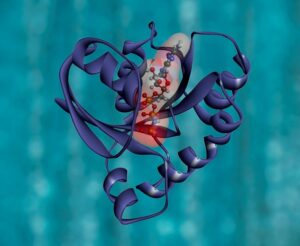
ASPARTATE AMINOTRANSFERASE

Introduction to Aspartate Aminotransferase (AST) Aspartate Aminotransferase (AST), which was historically referred to as serum glutamic-oxaloacetic transaminase (SGOT), represents a vital enzyme within the human body that facilitates the biochemical conversion of nitrogenous compounds. As a pyridoxal phosphate-dependent transaminase enzyme, AST is present in various tissues, though it is most prominently associated with the liver, […]

Read More

LYSINE

The Fundamental Nature and Biochemical Classification of Lysine Lysine is recognized in the field of biochemistry and nutritional science as an essential amino acid, a designation that underscores its critical role in human physiology and the necessity of its acquisition through external sources. As one of the twenty amino acids that serve as the primary […]

Read More

PROTEIN HORMONE

Introduction to Protein Hormones and Physiological Regulation Protein hormones represent a fundamental class of signaling molecules that are essentially comprised of varying chains of amino acids. These biochemical messengers are indispensable to the maintenance of homeostasis within the human body, acting as the primary communicators for a vast array of physiological processes. Unlike steroid hormones, […]

Read More

BIOGENIC AMINES

Introduction and Definition of Biogenic Amines Biogenic amines represent a critical class of biologically active organic compounds essential for the regulation of virtually all physiological processes across the living world. Derived fundamentally from the decarboxylation or transamination of common amino acids, these nitrogenous molecules serve as powerful modulators, signaling molecules, and precursors to various hormones […]

Read More

PEPTIDE

Definition and Classification The term peptide refers to a short series of amino acids that are linked together by covalent bonds known as peptide bonds. These molecules constitute the fundamental building blocks of larger structures, specifically proteins, and play indispensable roles as signaling molecules across virtually all biological systems. Peptides are distinguished from proteins primarily […]

Read More

ALPHA-ENDORPHIN

Definition and Classification Alpha-Endorphin is formally classified as an endogenous opioid peptide, a specialized neuroregulatory molecule produced within the central and peripheral nervous systems of mammals. Chemically, it is defined as a polypeptide structure, specifically composed of sixteen amino acid residues. This precise molecular architecture positions it within the broader family of endorphins, compounds renowned […]

Read More

AMINO ACID

Introduction and Fundamental Definition Amino acids represent the foundational molecular building blocks essential for all life processes, serving primarily as the monomers that link together to form complex protein molecules. Chemically, an amino acid is defined as an organic compound containing two critical functional groups: an amino group ($text{NH}_2$) and a carboxyl group ($text{COOH}$). Both […]

Read More

POLYPEPTIDE

Polypeptide The Core Definition and Molecular Structure A polypeptide is a complex biological molecule formed by a long, continuous chain of amino acid monomers linked together by covalent bonds known as peptide bonds. This primary structure, the linear sequence of amino acids, dictates the molecule’s eventual three-dimensional shape and function. While the terms polypeptide and […]

Read More

BIOGCNIC AMINE

Biogenic Amines Core Definition and Overview Biogenic amines represent a crucial class of naturally occurring organic compounds, widely distributed across various biological systems, including plants, animals, and humans. These molecules are fundamentally characterized by the presence of one or more amine groups and are derived through the biochemical process of decarboxylation from precursor amino acids. […]

Read More

PROTEIN METABOLISM

Protein Metabolism The Core Principles of Protein Metabolism Protein metabolism encompasses the intricate set of biochemical processes that govern the synthesis, breakdown, and regulation of proteins within living organisms. It is a fundamental physiological activity indispensable for maintaining cellular function, tissue repair, growth, and overall systemic homeostasis. At its essence, protein metabolism ensures a dynamic […]

Read More