Donders’s Law: Unlocking the Speed of Human Thought
Donders’s Law Introduction to Donders’s Law Donders’s Law stands as a foundational principle within the domain of psychophysics, a branch of psychology that investigates the relationship between physical stimuli and the sensations and perceptions they evoke. At its core, the law posits that the time required to execute a simple reaction is directly proportional to […]
EFFORT
The Intersection of Motivation and Human Performance In the expansive field of psychological inquiry, the relationship between motivation and human performance stands as a fundamental area of study. Performance is rarely a product of innate ability alone; rather, it is the result of a complex interplay between a person’s skills and the effort they are […]
MOTIVATORS
Introduction to the Psychology of Motivators In the expansive field of psychological inquiry, the concept of motivation stands as a cornerstone for understanding the complexities of human behavior and achievement. Broadly defined, motivators are the internal and external forces that initiate, direct, and sustain goal-oriented behaviors. Within various organizational, educational, and personal settings, these drivers […]
REACTION TIME (Response Latency)
Introduction to Reaction Time (RT) Reaction time (RT), frequently referred to in the literature as response latency, constitutes a fundamental behavioral measure in cognitive psychology and neuroscience. It quantifies the temporal interval required for an individual to initiate and execute a response following the presentation of a specific stimulus. This measure is not merely a […]
ARPEGGIO PARADOX
Introduction to the Arpeggio Paradox The Arpeggio Paradox stands as a landmark conceptual challenge within the field of motor control psychology, fundamentally questioning the adequacy of early behavioral models to explain complex, high-speed sequential movements. This paradox highlights a profound contradiction inherent in the classic stimulus-response (S-R) chain view of behavior, particularly when applied to […]
SIMPLE REACTION TIME (SRT)
the tame taken for a person to react to a stimulus. Compare choice reaction time; complex reaction time. Have a look on compound reaction time; discrimination reaction time. SIMPLE REACTION TIME (SRT): “The simple reaction time was the time it took Joe to press the button.”
RESPONSE INTEGRATION
Definition and Core Principles of Response Integration Response Integration, a foundational concept in motor control and learning psychology, refers to the systematic procedure of aggregating disparate, simple reflexes and isolated motor motions into cohesive, sophisticated, and ultimately highly efficient response sequences. This complex process is not merely the concatenation of actions but involves the creation […]
REACTION-TIME APPARATUS
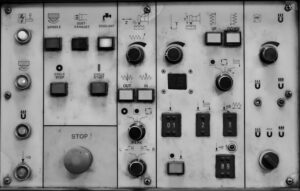
Defining the Reaction-Time Apparatus The Reaction-Time Apparatus refers comprehensively to any instrument, device, or integrated system meticulously engineered and calibrated for the precise measurement of the temporal interval transpiring between the presentation of a specific stimulus and the initiation or completion of a corresponding voluntary response by an organism, typically a human participant. This fundamental […]
REACTION TIME (RT)
Reaction Time (RT) Introduction and Core Definition Reaction time, often abbreviated as Reaction Time (RT), is fundamentally defined as the elapsed interval between the presentation of a sensory stimulus and the subsequent execution of a behavioral response. It serves as a vital metric in experimental psychology, neuroscience, and human factors research, quantifying the speed at […]
AUDITORY FEEDBACK
Auditory Feedback in Psychology The Core Definition of Auditory Feedback Auditory feedback (AF) is fundamentally defined as the auditory sensory information generated by an individual’s own actions or vocalizations, which is then processed and used to regulate, monitor, and adjust ongoing behavior. It represents a critical component of the body’s internal monitoring system, providing immediate […]
BIMANUAL INTERFERENCE
Bimanual Interference The Core Definition of Bimanual Interference Bimanual interference is a specific phenomenon within the study of motor control, defined as the degradation or impairment of performance in one hand or limb when the other hand is simultaneously engaged in a distinct or challenging motor task. Essentially, it highlights the difficulty the central nervous […]
PRIMARY LINE OF SIGHT
Primary Line of Sight Introduction to Primary Line of Sight The concept of Primary Line of Sight (PLOS) represents a fundamental principle within the study of human performance, particularly in disciplines concerned with perception, cognition, and motor control. It describes the most direct and unobstructed visual path between an individual (the performer) and an object […]
MULTIPLE-TASK PERFORMANCE
Multiple-Task Performance Introduction to Multiple-Task Performance Multiple-task performance, often referred to colloquially as multitasking, describes an individual’s ability to execute two or more actions or cognitive processes either simultaneously or in rapid alternation. In essence, it involves managing multiple demands on cognitive resources, which can range from simple, automatic behaviors to complex, deliberate mental operations. […]
ENVIRONMENTAL MANIPULATION
Environmental Manipulation Introduction: Defining Environmental Manipulation Environmental manipulation, in the realm of psychology, refers to the deliberate and systematic alteration of an individual’s physical or psychological surroundings with the explicit aim of influencing their behavior, performance, or overall well-being. This intricate process extends beyond mere passive observation of an environment; it involves actively designing or […]