Articles

Rotational Aftereffect: Why Your Brain Sees Motion
Conceptual Foundations of the Rotational Aftereffect (RAE) The Rotational Aftereffect (RAE) represents a sophisticated manifestation...
Conceptual Foundations of the Rotational Aftereffect (RAE) The Rotational Aftereffect (RAE) represents a sophisticated manifestation...

Historical Foundations of Movement Illusion Research The study of movement illusion—a perceptual phenomenon where a...

The Waterfall Illusion: A Review of Visual Perception The Waterfall Illusion (often referred to generically...

Introduction to the Pulfrich Effect The Pulfrich effect is a compelling visual phenomenon characterized by...
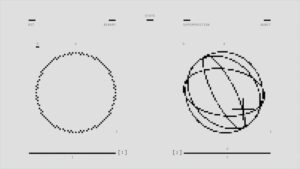
Defining the Kinetic Depth Effect (KDE) The Kinetic Depth Effect (KDE) is a powerful psychophysical...

MOVEMENT PERSPECTIVE: The Perception of Motion, Distance, and Orientation The concept of movement perspective, often...

Introduction and Definition of Apparent Movement Apparent movement, frequently referred to in psychological literature as...

Introduction and Definition of Smooth-Pursuit Movement Smooth-pursuit movement (SPM) represents a highly specialized category of...

Defining the Stroboscopic Illusion The Stroboscopic Illusion is a fundamental perceptual phenomenon wherein continuous motion...

Introduction to Paradoxical Motion Paradoxical motion refers to a fascinating phenomenon within visual psychology where...

Definition and Core Concepts Phenomenal motion, often referred to as apparent movement, describes the perception...

Introduction to the Magnocellular System The Magnocellular System, often abbreviated as the M-pathway, constitutes one...