Articles
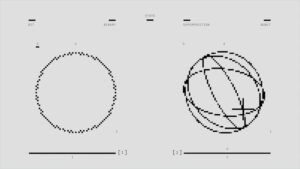
Kinetic Depth Effect: How Motion Unlocks Hidden Dimensions
Defining the Kinetic Depth Effect (KDE) The Kinetic Depth Effect (KDE) is a powerful psychophysical...
Defining the Kinetic Depth Effect (KDE) The Kinetic Depth Effect (KDE) is a powerful psychophysical...

Introduction to a Neurophysiological Pioneer Charles Scott Sherrington stands as one of the most towering...

STIMULUS (literally “goad”) The term stimulus originates from the Latin word meaning “goad” or “prick,”...

Introduction to Reaction Time (RT) Reaction time (RT), frequently referred to in the literature as...

Introduction to the Node of Ranvier The Node of Ranvier, often referred to in plural...

Definition and Core Function Neuroreceptors are highly specialized protein complexes situated primarily within the plasma...

Neuroeffector Transmission: Overview and Context Neuroeffector transmission represents the final, critical step in the efferent...

Introduction to Neural Folds Neural structures characterized by intricate folding patterns have become a central...

Introduction to the Lateral Gyrus The lateral gyrus represents a crucial anatomical and functional subdivision...
Kappa Wave: Definition, History, and Characteristics Abstract Kappa waves are a type of electrical activity...
Abstract and Overview The Intralaminar System (ILS) represents a crucial yet often underappreciated component of...

Introduction to Functional Magnetic Resonance Imaging (fMRI) Functional Magnetic Resonance Imaging, commonly abbreviated as fMRI,...