Articles

Opponent Process Theory: Decoding How We See Color
Opponent Cells and the Opponent Process Theory Opponent cells represent a fundamental mechanism within the...
Opponent Cells and the Opponent Process Theory Opponent cells represent a fundamental mechanism within the...

Introduction and Definition The primary taste cortex, often designated as the Gustatory Cortex (GC), represents...

Definition and Fundamental Principles of the Thermistor The thermistor, a portmanteau derived from “thermally sensitive...
Introduction to the Rate Law in Neurobiology The concept of the Rate Law, often referred...

Introduction to Memory Memory stands as one of the most fundamental and complex cognitive faculties...

Introduction and Definition The on-center bipolar cell is a highly specialized neuron located in the...

Introduction to the Summation Effect The Summation Effect represents a fundamental principle in neurophysiology and...
Introduction and Definition The subthalamus, often abbreviated as the STh, constitutes a critical, yet relatively...
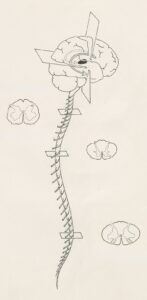
Introduction and Definition The Renshaw cell is a specialized type of inhibitory interneuron residing within...
Definition and Fundamental Characteristics The receptor potential constitutes the initial electrophysiological event occurring within a...

Historical Context and Definition of the Sensorium Commune The term sensorium commune refers historically to...

Introduction to the Krause End Bulb The Krause End Bulb, often referred to simply as...