Articles
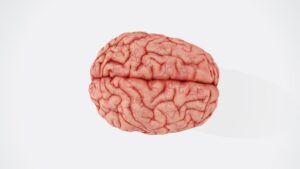
Area Postrema: The Brain’s Toxic Defense Mechanism
Anatomical Overview and Location The Area Postrema (AP) is a critical circumventricular organ (CVO) of...
Anatomical Overview and Location The Area Postrema (AP) is a critical circumventricular organ (CVO) of...

Introduction and Definition of the Sympathetic Chain The sympathetic chain, also known as the paravertebral...
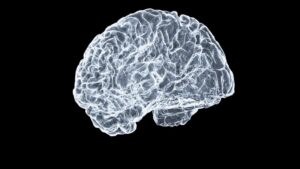
Introduction and Definitional Overview The parietal lobe constitutes one of the four principal lobes of...
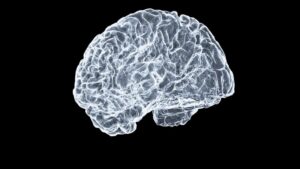
Introduction to Auditory Evoked Potential The Auditory Evoked Potential (AEP) refers to the naturally produced...
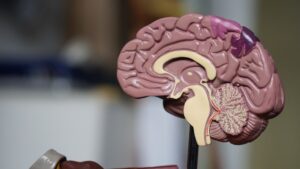
Introduction and Definition Phosphoinositides (PIs) constitute a vital class of lipid molecules that function predominantly...

Introduction and Definition of Phasic Activation Phasic activation constitutes a fundamental and highly adaptive mechanism...

Definition and Phylogenetic Context The concept of the archicortex refers to the phylogenetically oldest component...

Introduction and Definition of the Sexually Dimorphic Nucleus The Sexually Dimorphic Nucleus (SDN), often referred...

Introduction and Definition of Perceptual Localization Perceptual localization represents a fundamental cognitive and sensory process,...

Introduction and Core Definition The term Afferent, derived from the Latin ad ferre, meaning “to...

Introduction to the Amygdaloid Nuclei: Anatomy and Localization The amygdaloid nuclei, often simply referred to...

Introduction and Definitional Characteristics Amacrine cells represent a crucial and highly diverse population of interneurons...