Articles

The Internal Antagonist: Taming Your Hidden Self-Saboteur
Introduction to the Concept of the Antagonist The term antagonist originates from the Greek word...
Introduction to the Concept of the Antagonist The term antagonist originates from the Greek word...

Overview of the Involuntary Nervous System The involuntary nervous system serves as the fundamental regulatory...

The Conceptual Foundations of Isolation Experiments The isolation experiment represents a fundamental methodology within the...

Introduction to the Behavior Episode The concept of the Behavior Episode (BE) represents a significant...

Introduction to the International Union of Psychological Science (IUPsyS) The International Union of Psychological Science...

An Overview of the Urogenital System The urogenital system, often referred to as the genitourinary...

Introduction to the Nasopharynx The nasopharynx represents the most superior portion of the pharynx, situated...

An Introduction to the Behavior Systems Model The behavior systems model represents a sophisticated and...
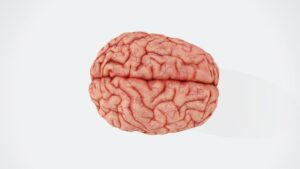
Introduction to the Motor Tract and the Central Nervous System The motor tract represents a...

Laughter: A Comprehensive Review of Its Physiological and Psychological Benefits The study of laughter represents...

Early Life and Education Walter Bradford Cannon (1871-1945) was an exceptionally influential American physiologist whose...

Sectioning is a technique used in medical science to analyze tissue samples and gain a...