Medial Temporal Lobe: The Architecture of Human Memory
Scientifically Reviewed · Dr. Marwa Abd-Alazim · September 9, 2026
Review Criteria & Clinical Standards
This content undergoes rigorous scientific peer-review and medical editorial standards at Arab Psychology Network to ensure clinical accuracy, validity, and compliance with evidence-based guidelines from leading psychological and healthcare authorities (APA / WHO).
Introduction and Anatomical Location
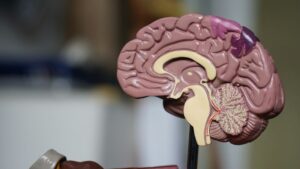
The Medial Temporal Lobe (MTL) is a complex, critical structure situated deep within the temporal lobe, forming a vital component of the cerebral hemispheres in both the left and right sides of the brain. Its strategic location places it at the nexus of sensory processing and higher-order cognitive functions, particularly those related to memory formation, organization, and retrieval. Anatomically, the MTL extends along the innermost surface of the temporal lobe, bordered superiorly by the lateral ventricle and inferiorly resting upon the tentorium cerebelli. This region is not a singular entity but rather a highly integrated system of interconnected cortical areas and subcortical nuclei, working in concert to process information flow between the neocortex and the foundational memory systems. Understanding the MTL is central to modern cognitive neuroscience, as damage or dysfunction within this relatively small area can lead to profound and debilitating amnesia, confirming its essential role as the brain’s primary memory consolidation machine.
The designation of the MTL as the primary hub for declarative memory—the conscious recall of facts and events—stems largely from seminal clinical observations and subsequent detailed neuroscientific research. Before information can be stored permanently in distributed cortical networks, it must first be processed and temporarily held within the structures of the MTL. This process requires continuous feedback loops and highly specialized neural circuitry capable of rapid plasticity. Although the MTL is often synonymous with memory, it is also intrinsically involved in processes such as spatial navigation, emotional regulation, and the initial processing of olfactory information, given the inclusion of the piriform cortex. The comprehensive study of the MTL involves dissecting the distinct contributions of its primary components, which include the hippocampus, the amygdala, and the surrounding parahippocampal cortices, each contributing unique functional attributes to the overall system.
Furthermore, the orientation of the MTL means it receives massive input from diverse association areas of the neocortex, including visual, auditory, and somatosensory information, channeled primarily through the entorhinal cortex before reaching the hippocampus. This convergence of multimodal sensory data is essential for forming holistic memories of complex events. The tight physical and functional integration of these structures dictates that they rarely operate in isolation; rather, memory encoding is the result of parallel processing across these interconnected subregions. The precise delineation of these pathways continues to be a major focus of neuroanatomical mapping efforts, aiming to fully characterize the specific subfields responsible for the temporal indexing and pattern separation required for effective memory storage and discrimination.
Key Structures of the Medial Temporal Lobe
The Medial Temporal Lobe encompasses several distinct anatomical structures that operate synergistically to fulfill its cognitive mandate. The three principal components highlighted in early research—the hippocampus, the amygdala, and the piriform area (or piriform cortex)—represent the most functionally important elements. However, a complete description of the MTL must also include the various interconnected cortical regions that serve as crucial interfaces between the neocortex and the deeper structures. These include the entorhinal cortex (EC), the perirhinal cortex (PRC), and the parahippocampal cortex (PHC), collectively known as the parahippocampal region.
The organizational architecture of the MTL is highly ordered, often described as a hierarchical system of information processing. Sensory input from the association cortices is initially routed into the parahippocampal region, where preliminary feature extraction and contextual analysis occur. Specifically, the perirhinal cortex is heavily specialized in processing “what” information, focusing on the identification and recognition of objects, while the parahippocampal cortex handles “where” and “when” information, focusing on spatial layout and context. This pre-processed information then converges onto the entorhinal cortex, which acts as the main gateway to the hippocampus proper, facilitating the complex process of encoding.
The core components of the MTL are structurally diverse, reflecting their specialized functions.
- The Hippocampus: Central to the formation of new long-term declarative memories and spatial mapping. It consists of the dentate gyrus, CA fields (CA1, CA2, CA3), and the subiculum.
- The Amygdala: Primarily involved in processing emotions, particularly fear and pleasure, and attaching emotional significance to memories. Its proximity to the hippocampus allows for the formation of potent emotional memories.
- The Piriform Cortex: Also known as the primary olfactory cortex, this area is responsible for processing the perception of smell. It is unique in that olfactory information bypasses the thalamus and projects directly to this paleocortical structure.
- The Entorhinal Cortex (EC): Serves as the primary interface between the hippocampus and the neocortex, acting as the main input and output hub for hippocampal activity.
These components are not merely adjacent but form a tightly integrated network, where disruptions in one area invariably affect the function of others, underscoring the delicate balance required for normal memory function.
The Role of the Hippocampus in Memory Encoding
The hippocampus stands as the most extensively studied structure within the Medial Temporal Lobe, recognized globally for its indispensable role in the encoding and consolidation of new declarative memories, which encompass both episodic memory (memories of specific events) and semantic memory (memories of facts and concepts). The mechanism by which the hippocampus achieves this is through a process known as Long-Term Potentiation (LTP), a persistent strengthening of synapses based on recent patterns of activity. LTP is thought to be the cellular basis of learning and memory, allowing neural circuits within the hippocampus, particularly along the trisynaptic pathway (perforant path to dentate gyrus, mossy fibers to CA3, and Schaffer collaterals to CA1), to rapidly adapt and store novel associations.
Beyond declarative memory, the hippocampus is critically involved in spatial cognition and navigation. Studies across various species have identified specialized neurons, termed “place cells,” within the hippocampus. These neurons fire selectively when an animal is in a particular location within its environment, essentially forming a cognitive map of space. This spatial mapping ability is crucial for episodic memory, as memories of events are inherently tied to the spatial and temporal context in which they occurred. Damage to the hippocampus impairs an individual’s ability not only to recall past events but also to navigate previously learned environments, highlighting the deep integration of memory and spatial processing within this structure.
The process of memory consolidation relies heavily on the hippocampal-neocortical interaction. Initially, new memories are unstable and highly dependent on the hippocampus. Over time, particularly during sleep, the hippocampus repeatedly reactivates the memory traces, facilitating a gradual transfer of information to more stable, distributed networks within the neocortex. This gradual restructuring minimizes the hippocampus’s involvement in the retrieval of old, well-established memories, explaining why remote memories are often spared in cases of hippocampal damage, while the formation of new memories (anterograde amnesia) is severely impaired. This transition from hippocampal dependence to neocortical independence is a fundamental concept in the standard model of memory consolidation.
The Amygdala and Emotional Processing
Adjacent and intricately linked to the hippocampus, the amygdala (derived from the Greek word for “almond,” reflecting its shape) is a cluster of nuclei deeply embedded within the anterior portion of the MTL. While the hippocampus focuses on the factual content of an experience, the amygdala is the primary structure responsible for assessing the emotional salience and assigning emotional value, particularly concerning fear, threat, and arousal. This functional specialization makes the amygdala indispensable for survival mechanisms, driving behaviors such as fight-or-flight responses and the rapid formation of protective emotional memories.
The key function of the amygdala in memory is its role in emotional modulation of memory encoding. Highly emotional events, whether positive or negative, are typically remembered with far greater clarity and detail than neutral events. This enhancement is mediated by the amygdala, which, when activated by emotional stimuli, modulates the activity of the hippocampus. During high arousal, stress hormones (like cortisol and epinephrine) signal the amygdala, which in turn strengthens hippocampal synapses via neuromodulatory pathways, effectively prioritizing the storage of emotionally charged information. This mechanism ensures that potentially dangerous or highly significant events are strongly encoded for future avoidance or recognition.
The amygdala is central to fear conditioning, a classical model used to study associative learning. In fear conditioning, a neutral stimulus (like a tone) is paired with an aversive stimulus (like a mild shock), leading to the neutral stimulus alone eliciting a fear response. The acquisition and expression of this conditioned fear rely critically on the integrity of the amygdala, particularly the lateral and central nuclei. Furthermore, the amygdala is involved in the retrieval of emotional memories, suggesting that its influence extends beyond the initial encoding phase. Dysfunction in the amygdala, or its pathways, is strongly implicated in various clinical conditions, including anxiety disorders, post-traumatic stress disorder (PTSD), and phobias, where inappropriate or excessive emotional memories dominate cognitive processing.
The Perirhinal and Parahippocampal Cortices
The Medial Temporal Lobe’s memory functions are supported by a crucial set of surrounding cortical regions known as the parahippocampal formation, which includes the Perirhinal Cortex (PRC) and the Parahippocampal Cortex (PHC). These areas serve as the primary processing filters, receiving highly processed sensory information from the unimodal and multimodal association cortices before relaying it to the entorhinal cortex and, subsequently, the hippocampus. Their distinct roles highlight the functional specialization necessary for the comprehensive encoding of complex memories.
The PRC, situated adjacent to the rhinal sulcus, is predominantly specialized for object recognition memory—the ability to recognize previously encountered items, regardless of their context. It receives substantial input from the ventral visual stream, often called the “what” pathway, and is critical for processing the features of objects. Damage limited to the PRC impairs performance on tasks requiring familiarity judgments, such as recognizing whether an item has been seen before, even if the ability to recall the context (episodic memory) remains relatively intact. This segregation of function suggests that recognition memory can operate somewhat independently from full episodic recall, a concept supported by dual-process theories of recognition memory which distinguish between recollection (hippocampal-dependent) and familiarity (PRC-dependent).
In contrast, the PHC receives its main input from the dorsal visual stream and parietal areas, focusing on spatial and contextual information. It is essential for processing the layout of environments, boundaries, and the context in which events occur. The PHC effectively answers the “where” question of an experience, providing the spatial backdrop necessary for the hippocampus to form a complete episodic trace. Together, the PRC and PHC ensure that the hippocampus receives rich, pre-integrated data—one stream focusing on the identity of objects and another focusing on the spatial and environmental parameters—allowing the hippocampus to bind these disparate elements into a unified, coherent memory of an event.
Functional Connectivity and Memory Systems
The effectiveness of the Medial Temporal Lobe memory system relies entirely on its intricate functional connectivity with the broader neocortex. The Entorhinal Cortex (EC) acts as the crucial intermediary, serving as the main input structure to the hippocampus via the perforant pathway and also receiving the primary output from the hippocampus (subiculum to EC). The EC itself is highly compartmentalized, with the lateral EC primarily receiving object-related information from the PRC and the medial EC receiving spatial information from the PHC. This segregation ensures that distinct streams of information are maintained and efficiently channeled into the specific subfields of the hippocampus where pattern separation and completion occur.
The concept of systems consolidation describes the lengthy post-encoding process where the MTL gradually organizes and stabilizes memory traces. This is not a passive transfer but an active dialogue, often occurring during periods of rest and sleep. During slow-wave sleep, hippocampal activity patterns related to recent experiences are repeatedly reactivated, or “replayed,” and transmitted back to the neocortical sites from which the original sensory information originated. This replay mechanism strengthens the direct neocortical connections, gradually making the memory independent of the initial hippocampal index. This distributed storage explains why memories that are decades old can be retrieved without a functioning hippocampus, whereas memories formed just prior to MTL damage cannot.
Furthermore, the MTL is connected to the prefrontal cortex (PFC), a region essential for working memory, planning, and executive control. This PFC-MTL loop is critical for strategic memory retrieval, source monitoring (knowing when and where a memory was acquired), and the conscious effort required to suppress irrelevant memories. Disruptions in this functional network, often seen in aging or neurological disorders, impair not only the ability to form new memories but also the capacity to effectively use existing memories to guide future behavior, underscoring the dynamic interplay required between the MTL’s storage function and the PFC’s control function.
Clinical Significance and Associated Disorders
The Medial Temporal Lobe is disproportionately vulnerable to injury, disease, and age-related pathology, making it a focal point for understanding amnesia and progressive neurodegenerative disorders. The most dramatic evidence of the MTL’s indispensable role came from the study of patient H.M. (Henry Molaison), who underwent bilateral removal of the MTL structures, including the majority of the hippocampus and amygdala, to treat intractable epilepsy. Post-surgery, H.M. suffered severe, global anterograde amnesia, losing the ability to form new declarative memories, while his intelligence, personality, and ability to learn new procedural skills remained largely intact. This case definitively established the MTL as the primary site for the consolidation of new long-term declarative memories.
The MTL is also the earliest and most severely affected region in Alzheimer’s Disease (AD). Pathological hallmarks of AD, including neurofibrillary tangles and amyloid plaques, first appear in the entorhinal cortex and hippocampus before spreading throughout the neocortex. The progressive loss of neurons in these MTL regions directly correlates with the hallmark cognitive symptom of AD: profound impairment in episodic memory, particularly the inability to learn new information. Early diagnosis of AD often relies on detecting subtle structural and functional changes within the hippocampus and surrounding parahippocampal cortices, underscoring their sensitivity to the disease process.
Finally, the MTL is a common focus for Temporal Lobe Epilepsy (TLE). Seizures often originate in the hippocampus or the amygdala, frequently associated with a condition called hippocampal sclerosis—a loss of neurons and gliosis within the hippocampal formation. Chronic TLE can lead to secondary memory and emotional deficits, even outside of seizure episodes, due to continuous disruption of normal MTL circuitry. Treatment for refractory TLE sometimes involves targeted surgical resection of the affected MTL structures, a procedure that, while potentially seizure-free, necessitates careful consideration of the inevitable cognitive costs, requiring thorough pre-surgical mapping of lateralized memory functions.