Tag: clinical assessment


Orthonasia: Posture and Psychological Well-being

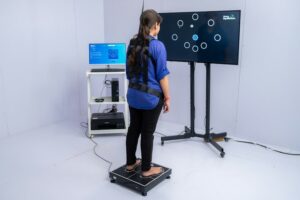
Orthonasia: An Innovative Approach to Posture Analysis Postural analysis is a critical component of both clinical and research-based assessments. It involves the evaluation of an individual’s posture, joint movement, and muscular coordination. Orthonasia is an innovative posture analysis system that provides a comprehensive assessment of posture within a single session. Orthonasia is composed of two […]

Read More

DIAGNOSES) 1

The Conceptual Framework of Clinical Diagnosis Clinical diagnosis in the field of psychology is defined as the systematic and rigorous process of identifying a specific mental disorder or psychological condition within an individual. This procedure is far more complex than the simple application of a label; it represents a comprehensive and holistic evaluation of a […]

Read More

NONLANGUAGE TEST

Foundational Concepts and Definition of Nonlanguage Tests In the field of psychological assessment and psychometrics, nonlanguage tests represent a specialized category of evaluation tools designed to measure an individual’s cognitive, motor, and perceptual capabilities without relying on the use of spoken or written language. These assessments are fundamental in providing a comprehensive understanding of a […]

Read More

MENTAL STATUS EXAMINATION (MSE)

Mental Status Examination (MSE): A Comprehensive Review Introduction Mental status examinations (MSEs) are a crucial component of clinical assessment and are employed to determine a patient’s cognitive and affective functioning. The examination assesses a patient’s current level of mental functioning, which can be used to diagnose mental health conditions, plan treatment, and monitor the patient’s […]

Read More

FINGER TAPPING TEST

Overview and Definition of the Finger Tapping Test The Finger Tapping Test (FTT), frequently referred to in clinical literature as the Finger Oscillation Test, serves as a cornerstone in the field of neuropsychological assessment. At its core, the Finger Tapping Test is an objective measure designed to evaluate motor coordination, neuromuscular integrity, and motor speed. […]

Read More

BASELINE ASSESSMENT

The Conceptual Framework of Baseline Assessment In the field of clinical practice and psychological research, a baseline assessment is defined as a comprehensive evaluation conducted at the very beginning of a patient’s journey through the healthcare system. This initial measurement serves as the “point zero” from which all subsequent changes, improvements, or regressions are measured. […]

Read More

BRIEF PSYCHIATRIC RATING SCALE (BPRS)

Fundamental Overview of the Brief Psychiatric Rating Scale (BPRS) The Brief Psychiatric Rating Scale (BPRS) stands as one of the most widely utilized and venerable instruments in the field of clinical psychiatry and psychopharmacological research. Originally developed to provide a rapid yet comprehensive assessment of psychiatric symptoms, the scale serves as a primary tool for […]

Read More

ECOBEHAVIORAL ASSESSMENT

Ecobehavioral Assessment: An Innovative Tool for Assessing Developmental and Behavioral Health Abstract This article provides a comprehensive overview of Ecobehavioral Assessment (EBA), a sophisticated and innovative framework utilized for assessing developmental and behavioral health across the lifespan. EBA is fundamentally a multi-disciplinary and ecological approach, designed to move beyond traditional diagnostic models by understanding the […]

Read More

CANCELLATION TEST

CANCELLATION TEST: An Encyclopedia Entry on Cognitive Assessment Introduction to the Cancellation Test The Cancellation Test is a widely recognized and fundamental psychometric assessment utilized within the field of clinical neuropsychology for the evaluation of specific cognitive abilities in human subjects. Primarily, it functions as a highly sensitive tool for measuring visual selective attention, sustained […]

Read More

BDI-II Assessment

Introduction and Historical Context The Beck Depression Inventory-II (BDI-II) stands as one of the most widely recognized and frequently utilized self-report instruments for the quantitative assessment of depressive symptomatology. Serving as a crucial tool for clinicians and researchers worldwide, the BDI-II provides a reliable measure of both the presence and the current severity level of […]

Read More

READINESS TESTS

READINESS TESTS Readiness tests constitute a specialized category of psychological and educational assessments fundamentally designed to measure an individual’s capacity, skill level, or prerequisite knowledge base in preparation for a subsequent, more demanding stage of instruction, training, or activity. These assessments serve as crucial diagnostic and predictive tools, determining whether a person possesses the foundational […]

Read More

DIAGNOSTIC INTERVIEW SCHEDULE (DIS)

Introduction and Definition of the DIS The Diagnostic Interview Schedule (DIS) is a highly formalized, structured psychiatric interview designed specifically for use in large-scale epidemiological studies and clinical research settings. It stands as a landmark achievement in psychometrics, representing a crucial shift from relying solely on unstructured, subjective clinical interviews toward objective, reproducible diagnostic assessment. […]

Read More

DYNAMIC ASSESSMENT

Introduction to Dynamic Assessment Dynamic Assessment, often abbreviated as DA, represents a profound shift in clinical and educational evaluation methodologies, moving beyond the mere measurement of current performance to explore the individual’s learning potential and capacity for change. Inherently, Dynamic Assessment utilizes the foundational principles of dynamic testing, prioritizing the process of interaction and learning […]

Read More

SOCIAL AGE (SA)

Definition and Conceptual Framework of Social Age (SA) Social Age, abbreviated as SA, constitutes a critical estimate utilized in developmental and clinical psychology, representing an individual’s capabilities in navigating complex social situations relative to normative, age-appropriate standards. Unlike chronological age, which is merely a measure of time elapsed since birth, SA provides a functional metric—a […]

Read More

PRCMORBID ADJUSTMENT

PREMORBID ADJUSTMENT Defining Premorbid Adjustment Premorbid adjustment is a critical concept in clinical and abnormal psychology, serving as an assessment of an individual’s level of functioning prior to the definitive onset of a severe psychological or psychiatric disorder. Essentially, it provides a retrospective gauge of the degree of social, academic, and occupational competence achieved by […]

Read More

ATAXIAGRAPH

The Ataxiagraph: An Advanced System for Neurological Assessment The Core Definition of the Ataxiagraph The Ataxiagraph is a highly specialized, novel psychometric tool designed specifically for the quantitative and objective assessment of Ataxia severity in patients suffering from various neurological disorders. Ataxia, fundamentally, is a pervasive lack of voluntary coordination of motor skills, which can […]

Read More

COMPUTERIZED ADAPTIVE SCREENING TEST (CAST)

Computerized Adaptive Screening Tests (CASTs) have become an increasingly popular tool for the assessment of cognitive abilities in clinical and research settings. CASTs are computer-based tests that adapt to the responses of an individual, presenting items that are tailored to the individual’s ability level. CASTs can be used to assess a wide range of cognitive […]

Read More

BRIL SCALE

The BRILL Scale (BRILLS): An Assessment Tool for Autism Spectrum Disorder The Core Definition of the BRILL Scale The BRILL Scale, often referred to as BRILLS, stands as a standardized assessment tool meticulously designed to quantify the severity of symptoms observed in individuals diagnosed with an autism spectrum disorder (ASD). This instrument provides a structured […]

Read More

AGE-EQUIVALENT SCALE

Age-Equivalent Scale The Core Definition of Age-Equivalent Scales An age-equivalent scale represents a method of scoring on a standardized test that compares an individual’s performance to the average performance of a specific age group. Essentially, if a child achieves a score on a particular assessment that is typical for a 7-year-old, their performance is said […]

Read More

DOERFLER-STEWART TEST

Doerfler-Stewart Test Introduction to the Doerfler-Stewart Test The Doerfler-Stewart Test is a significant and widely adopted diagnostic framework in clinical psychology and medicine, specifically designed to aid clinicians in differentiating between psychogenic and organic causes of a patient’s presenting symptoms. In essence, it provides a structured approach to unravel the complex interplay between physical ailments […]

Read More

ROMBERG’S SIGN

Romberg’s Sign Introduction to Romberg’s Sign Romberg’s sign is a fundamental clinical test used in neurology to assess a patient’s ability to maintain postural balance, particularly when visual input is removed. It serves as a crucial indicator for diagnosing specific types of neurological dysfunction, primarily those affecting the sensory pathways responsible for proprioception. The sign […]

Read More