Tag: Coordination


Disorganized Development: Why Chaos Hinders Human Growth

Disorganized Development: Why Chaos Hinders Human Growth

Disorganized Development The Core Definition Disorganized development, in the context of national and regional progress, fundamentally describes a pervasive and critical absence of coordinated planning, strategic foresight, and integrated execution across diverse economic and social activities within a given system. This profound lack of orchestration results in widespread systemic inefficiencies, which collectively act as significant […]

Read More

EQUILIBRIUM-POINT MODEL

Equilibrium-Point Model Introduction to the Equilibrium-Point Model The Equilibrium-Point (EP) Model stands as a foundational and widely recognized theoretical framework within the field of motor control, offering a compelling explanation for how the central nervous system orchestrates and executes voluntary movements. At its core, this model posits that movements are not meticulously planned as a […]

Read More

BALANCING

Balancing is a vital component of physical fitness, which is the ability to maintain the center of gravity over a base of support and control the body’s movements in relation to the environment (Cheung et al., 2018). Balance is an important factor for the maintenance of physical health, as it helps to prevent falls, injuries, […]

Read More

UNITY OF COMMAND

Introduction to Unity of Command The concept of Unity of Command is a foundational principle within organizational theory, management science, and military strategy, defining the requisite structure necessary for efficient and effective command and control (C2). At its core, it dictates that for any given action or group of actions, an employee or subordinate should […]

Read More

SUPPLEMENTARY MOTOR AREA

SUPPLEMENTARY MOTOR AREA The Supplementary Motor Area, commonly referred to as the SMA, constitutes a critical region within the medial frontal lobe, situated anterior to the primary motor cortex (M1) and superior to the cingulate motor area. Its principal physiological role is centered on the advanced planning and successful execution of complex motor programs, particularly […]

Read More

DYSDIADOCHOKINESIS

Introduction to Dysdiadochokinesis Dysdiadochokinesis, often abbreviated as DDK, is a specific neurological sign defined as the impairment of the ability to perform rapid, alternating, and repetitive movements smoothly and accurately. The term itself is derived from Greek roots: the prefix dys-, meaning difficulty or impairment; diadochos, meaning succeeding or alternating; and kinesis, referring to movement. […]

Read More

ASYNERGIA

Introduction and Definition of Asynergia Asynergia, sometimes referred to synonymously as asynergy, is a fundamental neurological sign defined as the faulty coordination and synchronization of muscle groups that are required to perform complex, unified motor movements. Normal movement, such as walking, standing, or reaching, requires the simultaneous and precisely timed contraction and relaxation of numerous […]

Read More

ATAXIAGRAPH

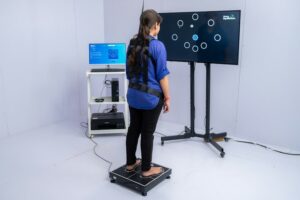
The Ataxiagraph: An Advanced System for Neurological Assessment The Core Definition of the Ataxiagraph The Ataxiagraph is a highly specialized, novel psychometric tool designed specifically for the quantitative and objective assessment of Ataxia severity in patients suffering from various neurological disorders. Ataxia, fundamentally, is a pervasive lack of voluntary coordination of motor skills, which can […]

Read More

REPLICATION PLANE

Replication Plane Introduction to the Replication Plane Model The Replication Plane is a sophisticated conceptual model designed to bring clarity and a unified understanding to the complex mechanisms of replication and coordination within distributed systems. In the realm of distributed computing, where data and services are spread across multiple interconnected nodes, ensuring high availability, fault […]

Read More

SYNCHRONISM

Synchronism: A Psychological Concept for Coordinated Behavior Introduction to Synchronism In the vast landscape of psychological inquiry, understanding how individuals and groups coordinate their actions and interactions remains a central challenge. The concept of synchronism offers a unique and profound lens through which to examine this phenomenon, moving beyond simplistic notions of cooperation or mere […]

Read More

COORDINATION

Coordination in Psychology and Neuroscience The Core Definition of Coordination Coordination in the context of psychology and neuroscience refers to the intricate process by which multiple, often disparate, elements of behavior are integrated and harmonized to produce a unified, coherent, and goal-directed response. This fundamental concept underpins nearly all complex human activities, from simple motor […]

Read More

PSYCHOMOTOR SKILL

PSYCHOMOTOR SKILL Introduction: Defining Psychomotor Skill A psychomotor skill is fundamentally defined as the intricate ability to seamlessly integrate physical movement with mental processes to achieve a specific, desired outcome. This complex interplay signifies more than mere physical action; it encompasses the cognitive planning, sensory perception, and feedback mechanisms that guide and refine movement. It […]

Read More

DIADOCHOKINESIS

Diadochokinesis Core Definition of Diadochokinesis Diadochokinesis is a specialized motor skill that encompasses the capacity to execute rapid, alternating movements with exceptional coordination and rhythmic precision. It represents a fundamental aspect of motor control, requiring the seamless and swift transition between two distinct, opposing actions. This ability is not merely about speed but also about […]

Read More